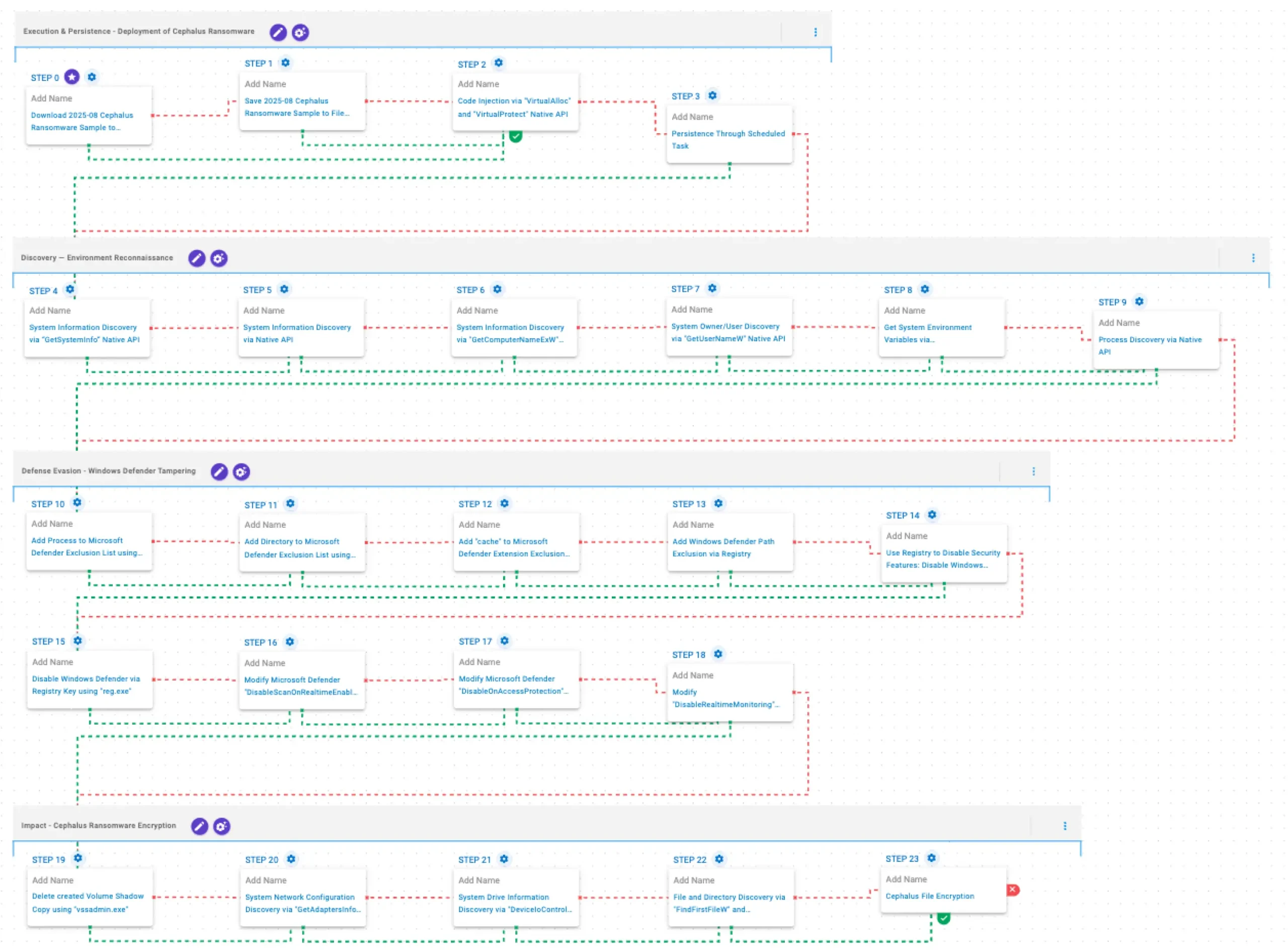
Cephalus is a Go-developed ransomware family observed from June 2025 that gains initial access mainly through exposed RDP without MFA, often using stolen credentials, and follows a double-extortion model by exfiltrating sensitive data prior to encryption. AttackIQ published an emulation of Cephalus TTPs to help organizations validate controls and test detection/prevention…
Tag: SPYWARE

Civil society groups warn that NSO Group is using its submission to the Pall Mall Process to whitewash a long record of human rights abuses tied to its Pegasus spyware, while providing little transparency or evidence of enforcement. Critics and officials stress that consultation responses do not equal endorsement and call…
Zscaler ThreatLabz identified Operation Neusploit in January 2026, attributing the campaign to APT28 using specially crafted RTFs that exploit CVE-2026-21509 to deliver MiniDoor and PixyNetLoader/Covenant Grunt implants. The multi-stage chain used region-targeted server-side evasion, COM hijacking, steganography in a PNG, and scheduled tasks to achieve persistence and C2 via the Filen API. #APT28 #PixyNetLoader
![Cybersecurity News | Daily Recap [30 Jan 2026]](https://www.hendryadrian.com/tweet/image/DailyRecap.png "Cybersecurity News | Daily Recap [30 Jan 2026]")
Daily Recap, a wave of critical flaws including n8n CVE-2026-1470/0863 enabling authenticated remote code execution and extensive updates across builds, alongside KEV catalog additions (Microsoft Office CVE-2026-21509, GNU InetUtils, SmarterMail, Linux kernel) highlight widespread risk across software, networks and OT. In parallel, state-backed and criminal groups continue weaponizing legacy flaws (WinRAR CVE-2025-8088 with UNC4895/RomCom, APT44, Turla), LLM/MCP abuses (Operation Bizarre Bazaar), C2 abuse (Sheet Attack), exposed AI tools (Bondu Panel, ChatGPT) and infrastructure attacks (IPIDEA takedown, Poland grid disruption), underscoring the need for resilient, AI-assisted defenses. #n8n #OperationBizarreBazaar
Arsink is a cloud-native Android RAT that exfiltrates extensive personal data and grants remote operators intrusive control over infected devices while abusing legitimate cloud services for C2 and media/file exfiltration. The campaign deployed 1,216 distinct APKs across global social-engineered distribution channels and used 317 Firebase Realtime Database endpoints, Google Apps Script/Drive, and Telegram for C2 and exfiltration. #Arsink #Firebase
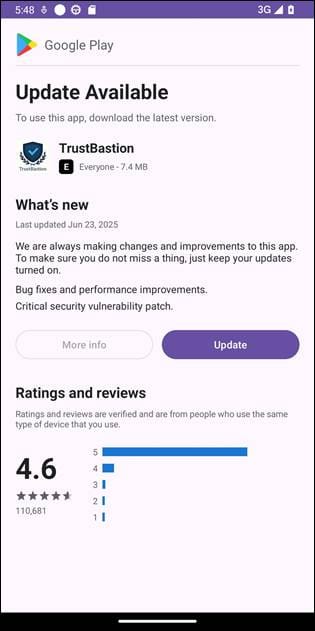
Bitdefender researchers uncovered an Android RAT campaign that uses a malicious dropper (TrustBastion) and Hugging Face as a hosting/staging platform to deliver polymorphic APK payloads. The malware abuses Accessibility Services, screen-capture/overlay permissions and fake financial interfaces to steal credentials and exfiltrate data via a C2 at 154.198.48.57. #TrustBastion #HuggingFace…
Attackers abused Hugging Face datasets to distribute an Android remote access trojan via a fake security app named TrustBastion, Bitdefender reports. The TrustBastion dropper tricks users with update dialogs, fetches payloads from a Hugging Face repository, requests broad Accessibility and screen-capture permissions, and uses persistent C&C channels to exfiltrate screen content…
Daily Recap, The day’s cybersecurity news shows ongoing exploitation of the WinRAR CVE-2025-8088 to drop silent payloads into Windows Startup folders by nation-state and criminal groups. It also highlights high-severity flaws such as Grist Core RCE in Pyodide, React2Shell deserialization, Fortinet FortiOS SSO bypass, and other attacks, underscoring urgent patching and proactive defense. #WinRAR #React2Shell
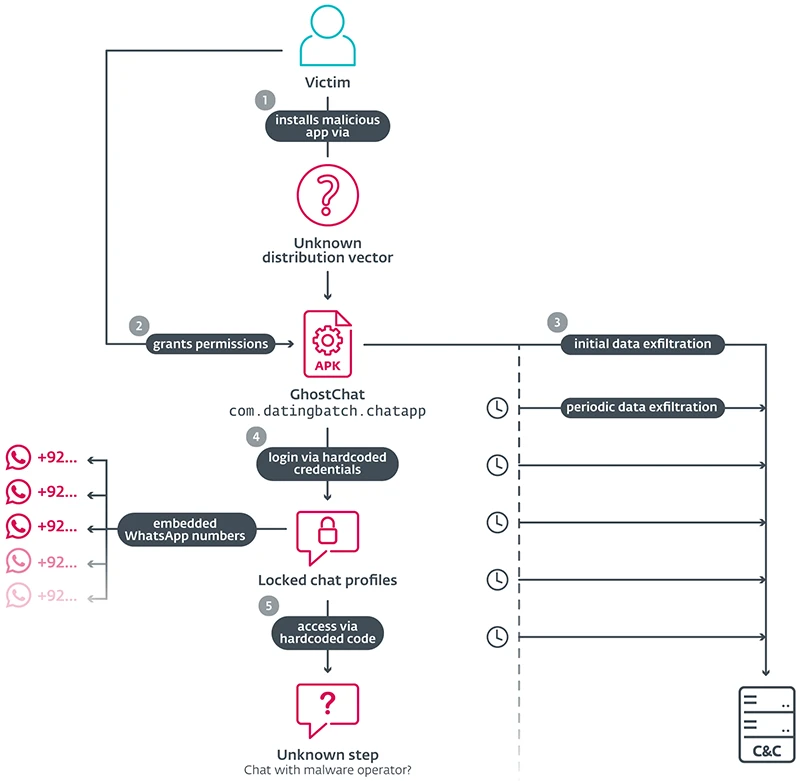
ESET researchers uncovered an Android spyware campaign called GhostChat that uses fake dating/chat profiles and romance-scam tactics to trick users in Pakistan into installing a malicious app disguised as a chat service. The app runs silent surveillance—exfiltrating images and documents—while the wider infrastructure uses ClickFix social engineering and WhatsApp QR device-linking…
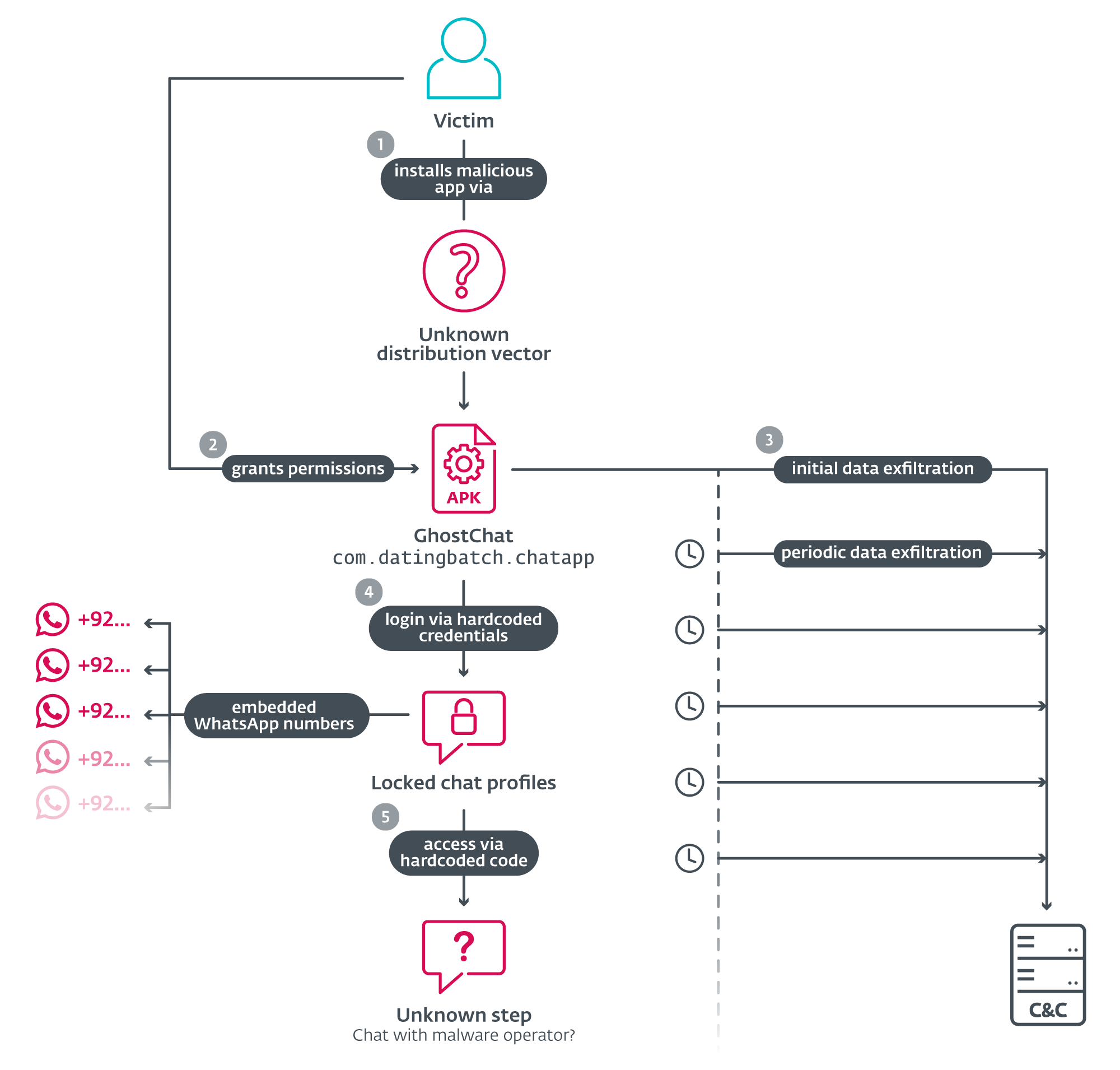
ESET researchers uncovered a targeted Android spyware campaign in Pakistan using a fake dating/chat app called GhostChat that lures victims with “locked” female profiles and hardcoded access codes while silently exfiltrating device data. The investigation links GhostChat to broader activity including ClickFix DLL payloads and a WhatsApp QR-linking scheme (GhostPairing) using fake government websites and the C&C domain hitpak[.]org. #GhostChat #PKCERT

Meta is rolling out “Strict Account Settings” on WhatsApp to provide lockdown-style protections for journalists, public figures, and other high-risk users against sophisticated threats like spyware and zero-click exploits. The opt-in feature applies extreme controls from a user’s primary device—enabling two-step verification, blocking unknown media and calls, disabling link previews, and locking profile and presence data—as WhatsApp also migrates parts of its codebase to Rust for added resilience. #WhatsApp #NSOGroup

Meta announced Strict Account Settings on WhatsApp to protect high-risk users by locking accounts to the most restrictive options and blocking attachments and media from people not in a user’s contacts. The company is also rolling out a Rust-based “wamedia” library and additional memory-safety hardening across WhatsApp to reduce exposure to…

WhatsApp is introducing “Strict Account Settings,” a lockdown-style option that blocks attachments and media from people not in a user’s contacts to protect journalists and other public-facing individuals from sophisticated spyware. The feature follows past attacks—most notably the 2019 Pegasus campaign by NSO Group that targeted about 1,400 users—and will roll…

FortiGuard Labs describes a multi-stage Windows-focused campaign that uses social-engineered archives and LNK-triggered PowerShell to deploy staged loaders, abuse Defendnot to disable Microsoft Defender, install Amnesia RAT for extensive data theft and surveillance, and finally deliver Hakuna Matata–derived ransomware and a WinLocker to encrypt and lock victims’ systems. The operation leverages GitHub and Dropbox for modular hosting and the Telegram Bot API for C2 and exfiltration, while using registry and policy manipulation to suppress defenses and destroy recovery options. #Defendnot #AmnesiaRAT
Daily Recap, phishing activity escalates with an AiTM campaign abusing SharePoint to steal Microsoft credentials, compromise inboxes, and bypass MFA in the energy sector, while vishing kits synchronize fake login pages with live calls targeting Google, Microsoft, and Okta. Ransomware and exploits dominate the headlines, from Osiris using POORTRY to disable protections and exfiltrate data to Wasabi, to INC recovery of encrypted data and Ploutus ATM jackpotting linked to Tren de Aragua, alongside critical vulnerabilities in FortiCloud SSO, SmarterMail, InetUtils telnetd, and widespread security updates from GitLab, Outlook iOS, curl, and Teams. #SharePoint #AiTM #Microsoft #Google #Okta #Osiris #POORTRY #Wasabi #INC #Ploutus #TrenDeAragua #FortiCloudSSO #FortiOS #SmarterMail #InetUtils #telnetd #GitLab #Outlook #curl #Teams #Pwn2OwnAuto #FALSECUB #TamperedChef #NetNTLMv1 #MnCHOICES #ActiveDirectory