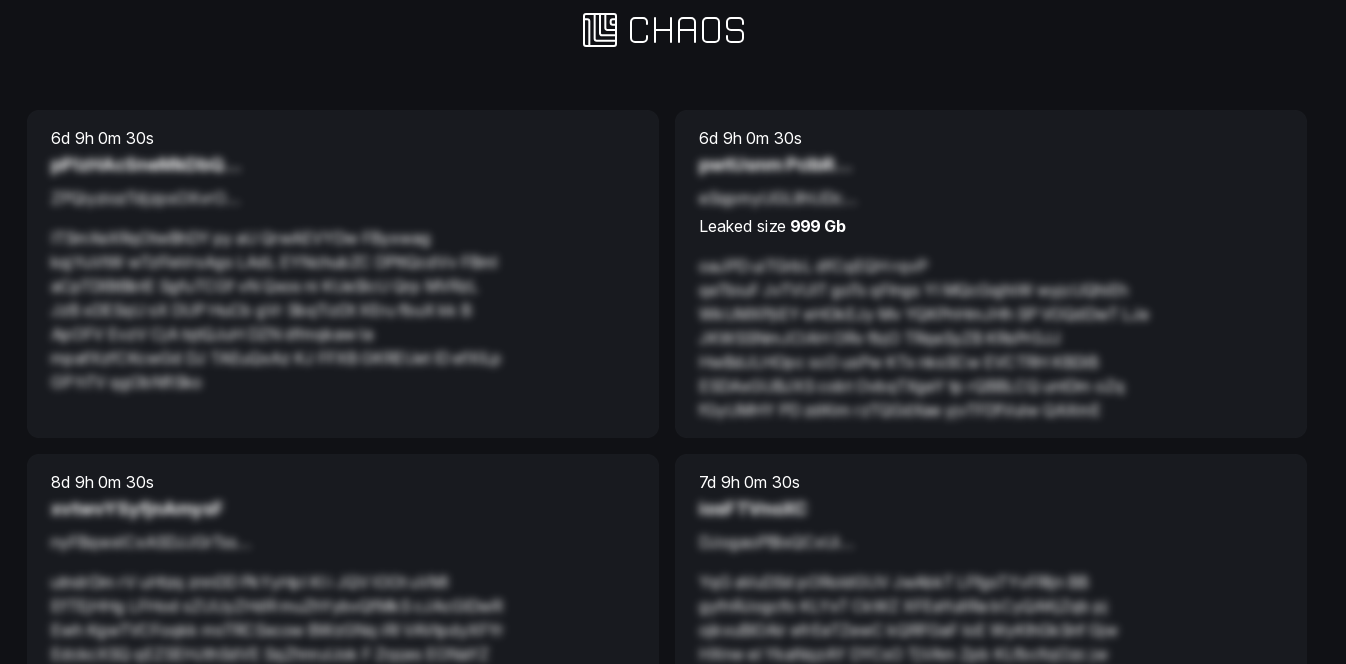
Rapid7 assessed an intrusion disguised as Chaos ransomware to be a false-flag operation likely linked to MuddyWater, using Microsoft Teams social engineering, credential theft, and remote access tools instead of encryption. The campaign centered on ms_upd.exe and Game.exe, with infrastructure and a code-signing certificate connecting the activity to Iranian MOIS-affiliated tradecraft. #MuddyWater #Chaos #MicrosoftTeams #DWAgent #AnyDesk
Keypoints
- The intrusion initially looked like a Chaos ransomware incident, but analysis suggested a state-sponsored false flag operation.
- Moderate-confidence attribution linked the activity to MuddyWater, an Iranian APT associated with MOIS.
- Attackers used Microsoft Teams chats and screen-sharing to harvest credentials and manipulate MFA.
- Rather than encrypting files, the operators focused on persistence, lateral movement, and data exfiltration.
- Remote access tools including DWAgent and AnyDesk were used to maintain control of compromised systems.
- The custom payload chain included ms_upd.exe as a downloader and Game.exe as a RAT disguised as a Microsoft WebView2 application.
- Technical artifacts such as the “Donald Gay” code-signing certificate and moonzonet[.]com C2 strengthened the MuddyWater link.
MITRE Techniques
- [T1566 ] Phishing (Spearphishing via Service) – Initial access was gained through Microsoft Teams messages and targeted social engineering (‘the TA engaged employees through external chat requests’).
- [T1059 ] Command and Scripting Interpreter – The attacker ran discovery and control commands such as ipconfig, whoami, and curl (‘executed basic discovery commands’).
- [T1082 ] System Information Discovery – Host details were gathered from infected systems (‘collecting basic host information, including computer name, username, and domain’).
- [T1016 ] System Network Configuration Discovery – Network configuration was enumerated using commands like ipconfig (‘accessed files related to the victim’s VPN configuration’).
- [T1078 ] Valid Accounts – Harvested credentials were reused to authenticate to internal systems (‘authenticated to internal systems, including a Domain Controller, using multiple compromised accounts’).
- [T1056 ] Input Capture – Victims were instructed to enter credentials into attacker-created text files (‘enter credentials into locally created text files’).
- [T1556 ] Modify Authentication Process – MFA settings were altered to include attacker-controlled devices (‘modify MFA configurations to include attacker-controlled devices’).
- [T1021.001 ] Remote Services: RDP – Remote Desktop was used for access and movement (‘established persistent remote access through RDP sessions’).
- [T1219 ] Remote Access Tools – DWAgent and AnyDesk were deployed for persistence and control (‘establish persistence using remote access tools such as DWAgent and AnyDesk’).
- [T1543 ] Create or Modify System Process – DWAgent was installed as a service (‘dwagsvc.exe – DWAgent serviced’).
- [T1055 ] Process Injection – A renamed python binary was used to inject code into suspended processes (‘the group’s signature use of pythonw.exe to inject code into suspended processes’).
- [T1105 ] Ingress Tool Transfer – Additional payloads were downloaded with curl (‘download additional payloads using curl’).
- [T1041 ] Exfiltration Over C2 Channel – Data was exfiltrated to external infrastructure (‘the TA exfiltrated data from the compromised environment’).
- [T1027 ] Obfuscated Files or Information – The RAT used XOR encoding and encrypted configuration data (‘XOR encoding … to hide specific anti-analysis strings’).
- [T1497 ] Virtualization/Sandbox Evasion – Game.exe checked for sandbox and VM artifacts (‘search for known analysis-related DLLs’).
- [T1622 ] Debugger Evasion – The malware included anti-analysis checks to avoid inspection (‘anti analysis techniques’).
- [T1071 ] Application Layer Protocol – C2 traffic used web-style endpoints over HTTP/S (‘polling /index.php every 60 seconds’).
- [T1573 ] Encrypted Channel – The RAT used encrypted C2 communication (‘decrypts its configuration using AES-256-GCM’).
- [T1133 ] External Remote Services – Compromised accounts were used to access VPN/external remote services (‘using compromised accounts’).
- [T1087 ] Account Discovery – User/account information was enumerated (‘gathering host information, including computer name, username’).
- [T1018 ] Remote System Discovery – Multiple systems were enumerated and moved through (‘move between systems’).
Indicators of Compromise
- [SHA256 ] Malware samples and related payloads – 24857fe82f454719cd18bcbe19b0cfa5387bee1022008b7f5f3a8be9f05e4d14, 1319d474d19eb386841732c728acf0c5fe64aa135101c6ceee1bd0369ecf97b6, and other 4 hashes
- [File names ] Droppers, RATs, and support binaries observed during the intrusion – ms_upd.exe, Game.exe, and other 5 file names
- [Domain ] Command-and-control and phishing infrastructure – moonzonet[.]com, uploadfiler[.]com
- [URL ] Credential harvesting and downloader locations – hxxps[://]adm-pulse[.]com/verify.php, hxxp[://]172.86.126[.]208:443/ms_upd.exe
- [IP addresses ] Malicious infrastructure and Teams-related source IPs – 77.110.107[.]235, 172.86.126[.]208, and other 2 IPs
- [Onion service ] Chaos ransomware leak site and negotiation portal – hptqq2o2qjva7lcaaq67w36jihzivkaitkexorauw7b2yul2z6zozpqd[.]onion
- [Certificate details ] Signing identity used across the malware chain – Donald Gay, Microsoft ID Verified CS AOC CA 02
- [Mutex ] Single-instance enforcement in Game.exe – ATTRIBUTES_ObjectKernel
Read more: https://www.rapid7.com/blog/post/tr-muddying-tracks-state-sponsored-shadow-behind-chaos-ransomware