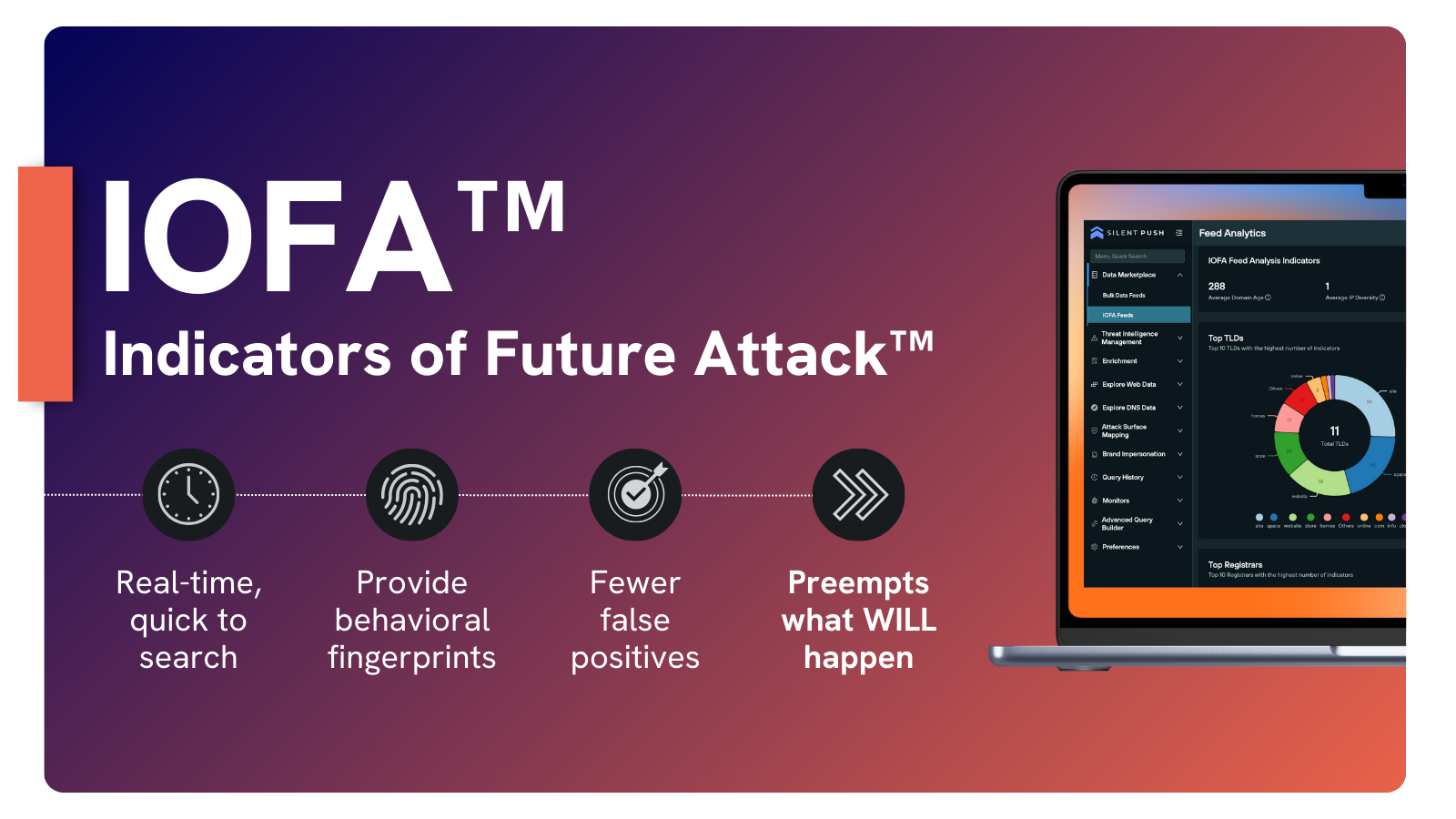
Threat intelligence data is crucial for understanding and mitigating cyber threats. This article compares Indicators of Future Attack (IOFA™) and traditional Indicators of Compromise (IOC), emphasizing IOFA™ as a more proactive approach for security teams in blocking potential attacks before they occur.
Affected: cybersecurity sector
Affected: cybersecurity sector
Keypoints :
- Threat intelligence data helps in anticipating, identifying, and mitigating cyber threats.
- IOCs are reactive data points indicating a prior cyberattack.
- IOFA™ are proactive indicators that predict future cyberattacks.
- IOFA™ allow security teams to target adversarial tactics before attacks are launched.
- Using IOFA™ enables teams to transition from reactive to proactive security operations.
- IOFA™ provides enhanced context and associated infrastructure insights compared to IOCs.
- IOFA™ can reduce false positives by delivering reliable true positive indicators.
MITRE Techniques :
- Proactive threat identification: Engaging with IOFA™ allows security teams to track adversarial TTPs before attacks.
Indicator of Compromise :
- No IoCs Found
Full Story: https://www.silentpush.com/blog/indicators-of-future-attack-vs-iocs/