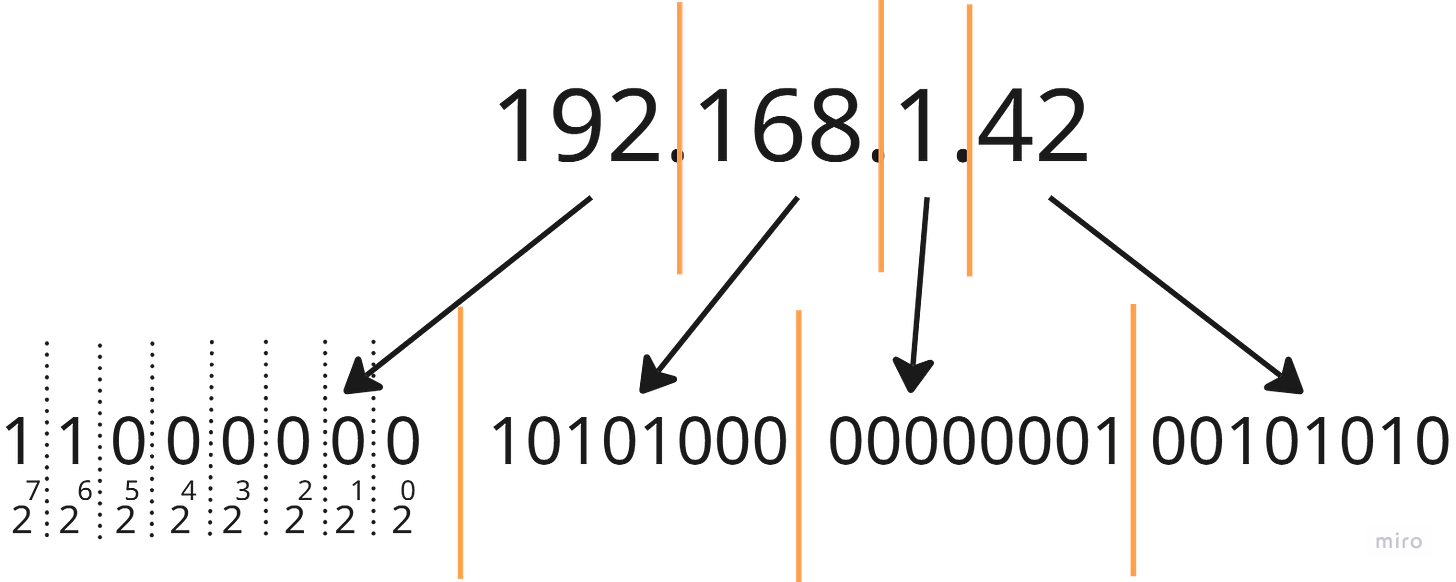
This article explains subnetting by reframing an IP address as a structured 32-bit number composed of four bytes, which makes the distinction between network and host bits intuitive. It defines subnet masks (for example, /24 = 255.255.255.0), explains how to calculate usable hosts and addresses, and provides practice examples and resources from Decoded Security. #IPaddress #SubnetMask
Keypoints
- Think of an IP address as four individual bytes (32 bits), not just a dotted label.
- Subnetting splits the bit string into network bits and host bits by placing a boundary.
- A subnet mask (e.g., /24 = 255.255.255.0) shows which bits are reserved for the network.
- The number of usable hosts equals 2^(host bits) minus 2 to exclude network and broadcast addresses.
- Practice with examples like /25, /27, and /12 to compute masks, ranges, and first/last usable addresses.
Read More: https://www.decodedsecurity.com/p/this-is-how-i-explain-subnetting