Unit 42 attributes a large-scale, state-aligned cyberespionage campaign — tracked as TGR-STA-1030 and called the Shadow Campaigns — to an Asia-based actor that has compromised government and critical infrastructure across 37 countries using phishing, exploitation, C2 frameworks and a novel eBPF rootkit. The group used tools including Diaoyu Loader, Cobalt Strike, VShell, web shells and the ShadowGuard rootkit while targeting ministries and organizations tied to economic and resource partnerships. #TGR-STA-1030 #ShadowGuard
Keypoints
- TGR-STA-1030 (aka UNC6619) is assessed with high confidence as a state-aligned group operating out of Asia, active since at least January 2024 and responsible for compromises across 37 countries.
- The group primarily targets government ministries and critical infrastructure, including five national-level law enforcement/border control entities and multiple ministries of finance and trade.
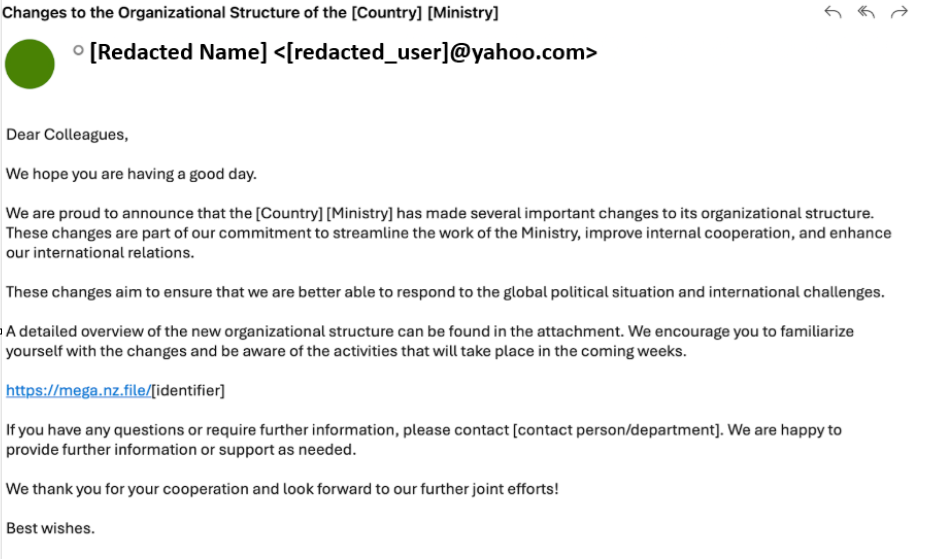
- Initial access techniques include targeted phishing campaigns (links to archives hosted on mega[.]nz) and exploitation of known N-day vulnerabilities rather than zero-days.
- Notable tooling and techniques include Diaoyu Loader (with sandbox-evasion checks), Cobalt Strike and a transition to VShell, additional frameworks (Havoc, SparkRat, Sliver), common web shells (Behinder, Neo-reGeorg, Godzilla) and tunneling tools (GOST, FRPS, IOX).
- Unit 42 discovered a unique Linux eBPF kernel rootkit named ShadowGuard that provides kernel-level process and file hiding, syscall interception and an allow-listing mechanism.
- Infrastructure practices include multi-tiered C2 hosted on legitimate VPS providers in jurisdictions with strong rule of law, use of relays and residential/Tor proxies, and occasional upstream connections from AS9808 IPs in the actor’s region.
- Unit 42 provided defensive IoCs (IPs, domains, SHA256 hashes, filenames) to impacted entities and industry partners and highlights Palo Alto Networks protections to mitigate the threat.
MITRE Techniques
- [T1566.002 ] Spearphishing Link – Actors sent targeted emails with a ‘lure of a ministry or department reorganization and links to malicious files hosted on mega[.]nz.’
- [T1204.002 ] User Execution: Malicious File – Victims are induced to download and execute archives and executables such as ‘Politsei- ja Piirivalveameti organisatsiooni struktuuri muudatused.zip’ and DiaoYu.exe which triggers payload deployment.
- [T1190 ] Exploit Public-Facing Application – The group attempted and leveraged numerous N-day exploits, for example they ‘attempted to exploit CVE-2019-11580, uploading a payload named rce.jar.’
- [T1505.003 ] Web Shell – The actor frequently deployed web shells (Behinder, Neo-reGeorg, Godzilla) on external and internal web servers for persistent access: ‘the three most common web shells used by the group are Behinder, Neo-reGeorg and Godzilla.’
- [T1071.001 ] Application Layer Protocol: Web Protocols – C2 frameworks and web access were configured over web protocols and ephemeral TCP ports: ‘the group often configures its web access on 5-digit ephemeral TCP ports using ordered numbers.’
- [T1572 ] Protocol Tunneling – The group tunneled traffic through tools such as ‘GO Simple Tunnel (GOST), Fast Reverse Proxy Server (FRPS), and IOX’ to move and anonymize traffic.
- [T1014 ] Rootkit – The actor deployed a Linux eBPF kernel rootkit named ShadowGuard for kernel-level concealment and process/file hiding: ‘we identified the group using a new Linux kernel rootkit, ShadowGuard.’
- [T1041 ] Exfiltration Over Command and Control Channel – The campaign’s upstream connections and multi-tiered C2 infrastructure support data theft and exfiltration back to actor-controlled networks: ‘the primary goal of an espionage group is to steal data.’
Indicators of Compromise
- [IP Addresses ] C2/relay infrastructure and victim-facing hosts – 138.197.44[.]208, 142.91.105[.]172, and 10 more IPs
- [Domains ] Domains used for C2, lures and targeting – gouvn[.]me, dog3rj[.]tech, and 10 more domains
- [Phishing/Downloader SHA256 ] Downloader artifacts observed in phishing archives – 66ec547b97072828534d43022d766e06c17fc1cafe47fbd9d1ffc22e2d52a9c0, 23ee251df3f9c46661b33061035e9f6291894ebe070497ff9365d6ef2966f7fe
- [Cobalt Strike SHA256 ] Cobalt Strike payloads linked to actor operations – 5175b1720fe3bc568f7857b72b960260ad3982f41366ce3372c04424396df6fe, 358ca77ccc4a979ed3337aad3a8ff7228da8246eebc69e64189f930b325daf6a, and 5 more hashes
- [ShadowGuard SHA256 ] eBPF rootkit sample unique to this group – 7808b1e01ea790548b472026ac783c73a033bb90bbe548bf3006abfbcb48c52d
- [CVE-2019-11580 Exploit SHA256 ] Exploit payload tied to Atlassian Crowd targeting – 9ed487498235f289a960a5cc794fa0ad0f9ef5c074860fea650e88c525da0ab4
- [File Names ] Malicious archive and executable observed in phishing lure – ‘Politsei- ja Piirivalveameti organisatsiooni struktuuri muudatused.zip’, DiaoYu.exe (original name DiaoYu.exe) and auxiliary file pic1.png used as an execution guardrail
Read more: https://unit42.paloaltonetworks.com/shadow-campaigns-uncovering-global-espionage/