Rooting and jailbreaking frameworks like KernelSU, APatch, SKRoot and Magisk hook into the Android kernel and often implement weak or flawed authentication, enabling malicious apps to escalate privileges and fully compromise rooted devices. zLabs demonstrated a KernelSU v0.5.7 vulnerability where an attacker manipulated file descriptor ordering to spoof the manager app and gain root access. #KernelSU #APatch
Keypoints
- Modern rooting frameworks converge on kernel patching techniques to intercept kernel functions and create covert manager interfaces for privilege escalation.
- Manager authentication is frequently weak or improperly implemented (password-based or package-based), enabling spoofing or bypass.
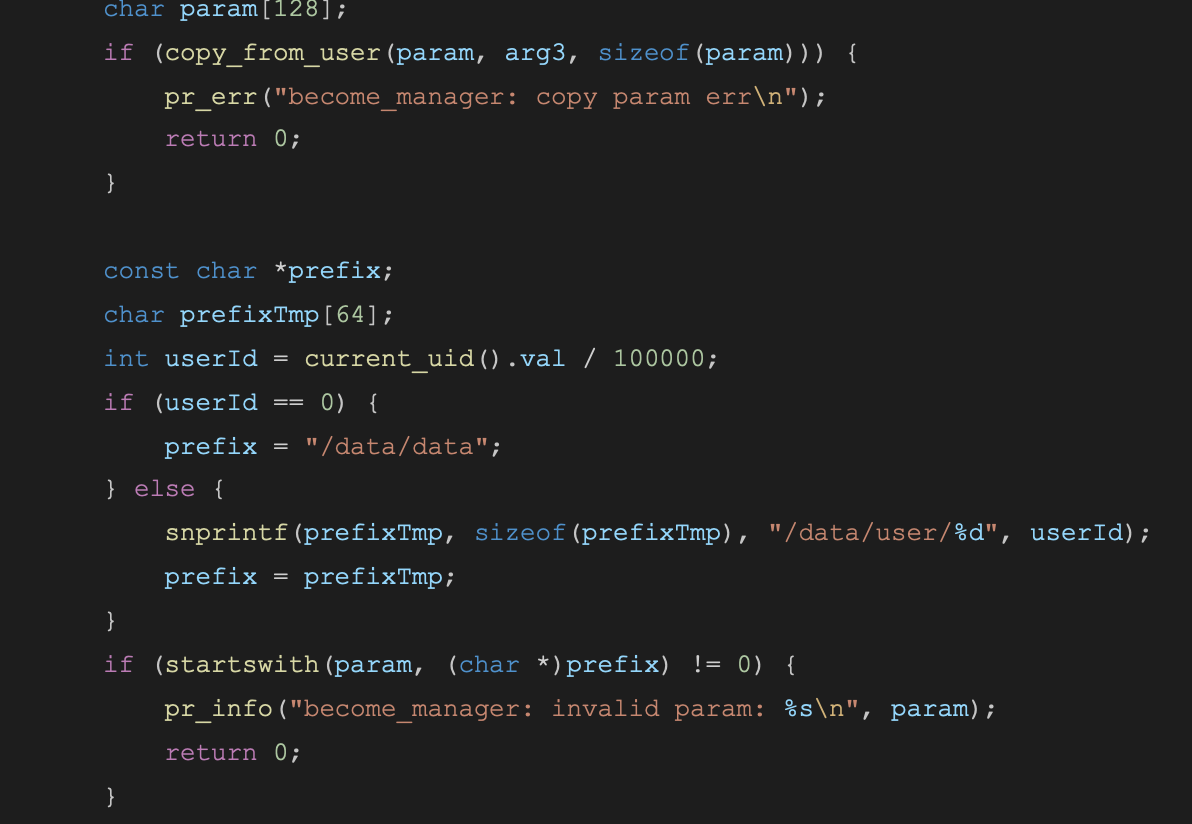
- KernelSU v0.5.7 used a prctl hook with magic value 0xDEADBEEF and commands like CMD_BECOME_MANAGER to authenticate and control root operations.
- KernelSU’s signature check relied on scanning the process fd table for /data/app/*/base.apk, creating a vulnerability exploitable by manipulating fd ordering.
- An attacker can bundle the legitimate manager APK in their app, open it on a lower fd, and call prctl(CMD_BECOME_MANAGER) to impersonate the manager and gain root.
- The attack is time-sensitive—successful only if the attacker’s app runs before the legitimate manager authenticates or after a reboot before the manager runs.
- zLabs recommends continuous monitoring and on-device protections (e.g., MTD, zDefend) to detect rooted devices, rooting tools, system tampering, and malicious APKs.
MITRE Techniques
- [T1543] Create or Modify System Process – Rooting frameworks hook kernel functions and modify kernel behavior to run privileged manager code and grant root privileges (“…hook into the prctl system call…to route execution into its own internal handler…”).
- [T1068] Exploitation for Privilege Escalation – The fd-ordering exploit in KernelSU v0.5.7 allowed an attacker to bypass signature checks and escalate to root by calling CMD_BECOME_MANAGER (“…manipulating file descriptor ordering…ensure the manager’s base.apk appears earlier in the fd table…”).
- [T1078] Valid Accounts (Impersonation) – The attack impersonates the legitimate KernelSU manager app by making the kernel validate the manager identity against the bundled legitimate base.apk (“…bundle the official KSU manager APK with their own application…open the official KernelSU manager’s base.apk…”).
- [T1622] Debugger Evasion (Abuse of Legitimate Tools) – Rooting tools create covert channels between kernel and manager apps, abusing legitimate syscalls (prctl) to perform privileged actions while evading normal controls (“…KernelSU hooks into the prctl system call…uses a predefined magic value 0xDEADBEEF…”).
Indicators of Compromise
- [File Path] attacker or bundled APK locations – examples: /data/data/com.attacker.manager, /data/app//.com.attacker.manager/lib//base.apk
- [Kernel Hook / Syscall] prctl hook usage – magic value 0xDEADBEEF used as prctl first argument (prctl(0xDEADBEEF, CMD_BECOME_MANAGER,…)).
- [Software Version] vulnerable component – KernelSU v0.5.7 (Git tag v0.5.7) referenced as containing the authentication flaw.