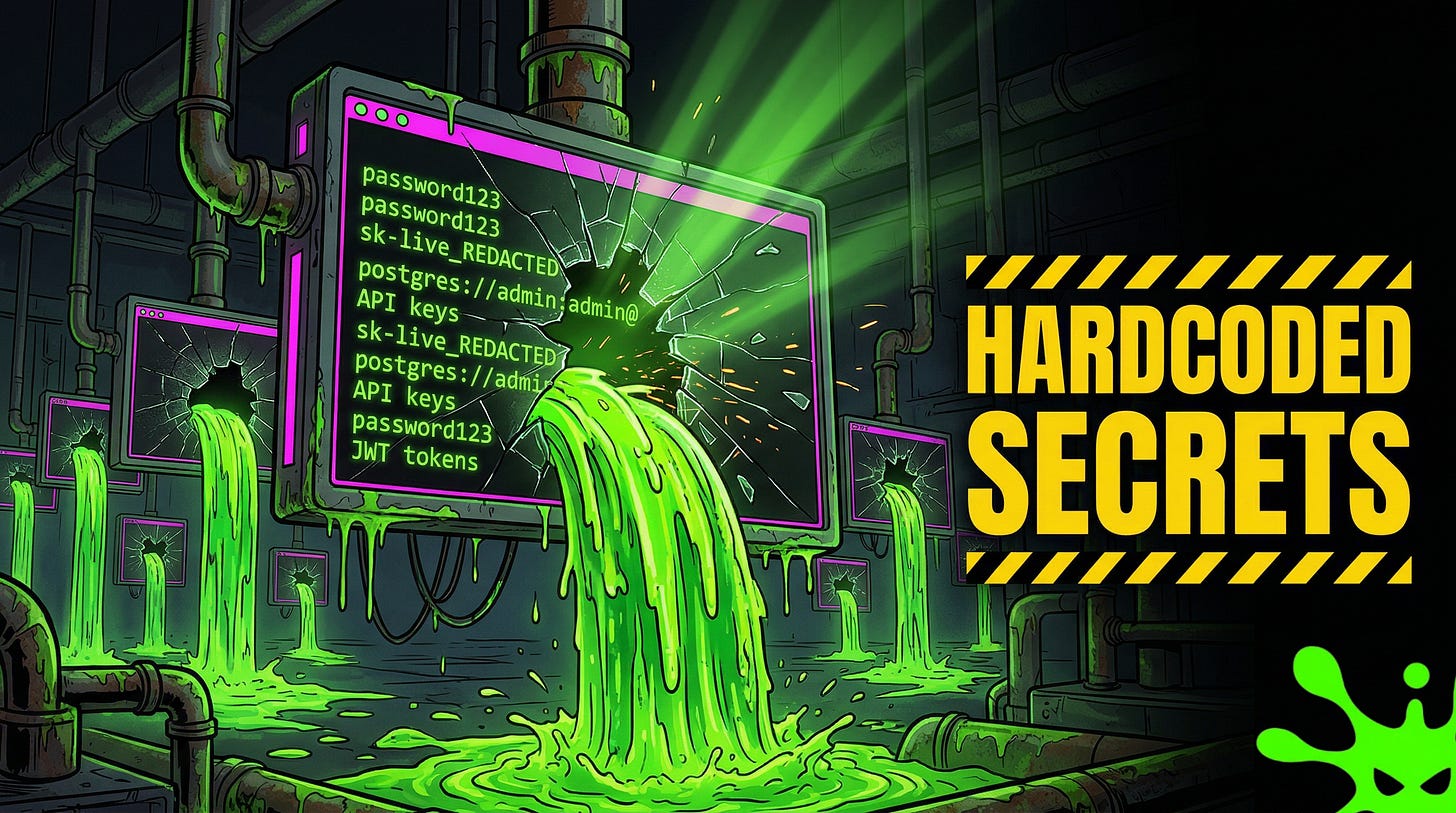
AI coding models frequently insert hardcoded credentials into generated code because they learned “working” patterns from public repositories, which puts secrets into source files, git history, and client-side bundles. Prevent with a fast pre-commit scanner and deep-history verification—Gitleaks blocks commits while TruffleHog scans history and verifies live credentials to prioritize rotation. #Gitleaks #TruffleHog
Keypoints
- AI models often reproduce inline credentials because training data contained many examples of hardcoded secrets.
- Hardcoded secrets can end up in source files, .env commits, git history, and client-side bundles where they are publicly accessible.
- Different LLMs reuse identifiable placeholder credentials, creating fingerprintable attack vectors for attackers.
- Use Gitleaks as a pre-commit hook to block secret commits and TruffleHog in CI to scan history and verify active keys.
- Always add .env to .gitignore, rotate exposed keys, use a secrets manager, or rewrite history with git-filter-repo when necessary.
Read More: https://www.toxsec.com/p/why-vibe-coding-leaks-your-secrets