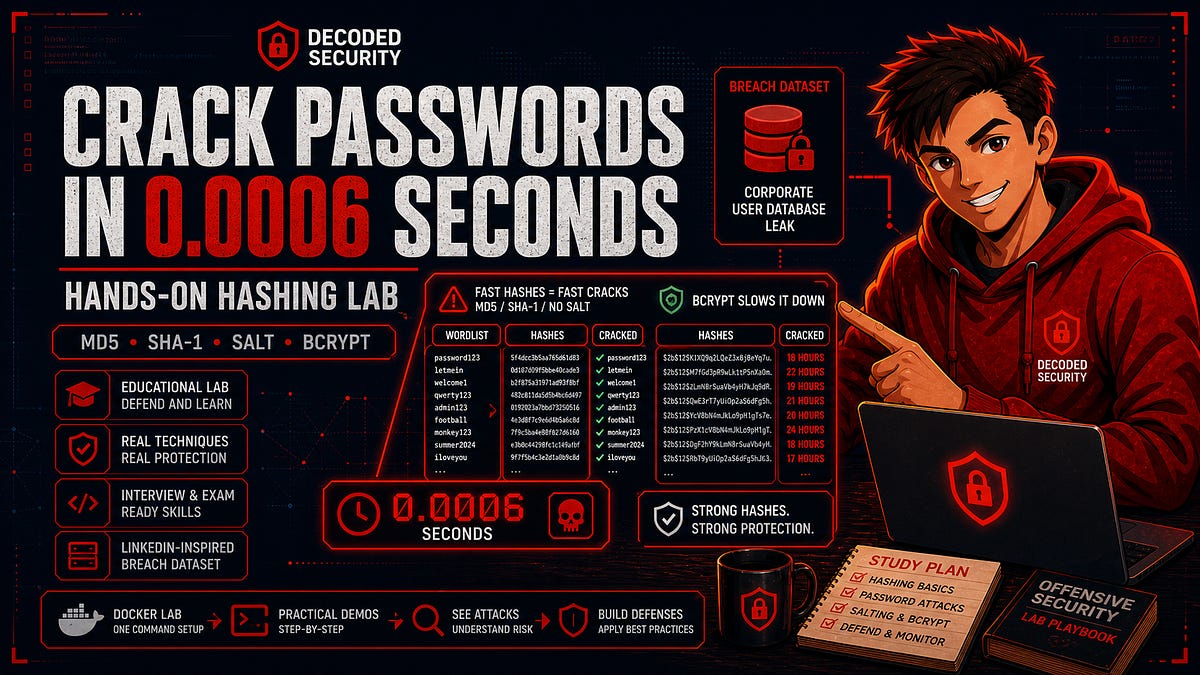
This article explains how LinkedIn’s 2012 breach showed the danger of using fast, unsalted hashes like MD5 and SHA-1 for password storage, which allowed attackers to crack millions of passwords with simple wordlists. It also shows why salts and purpose-built algorithms like bcrypt make password cracking much harder, and why these mistakes still matter today. #LinkedIn #MD5 #SHA1 #bcrypt
Keypoints
- LinkedIn’s 2012 breach exposed millions of hashed passwords.
- Unsalted hashes made password cracking fast and efficient.
- Dictionary attacks succeeded because many users picked predictable passwords.
- Salts force attackers to crack each hash individually.
- bcrypt slows hashing to resist large-scale cracking attacks.
Read More: https://www.decodedsecurity.com/p/hands-on-lab-how-attackers-crack