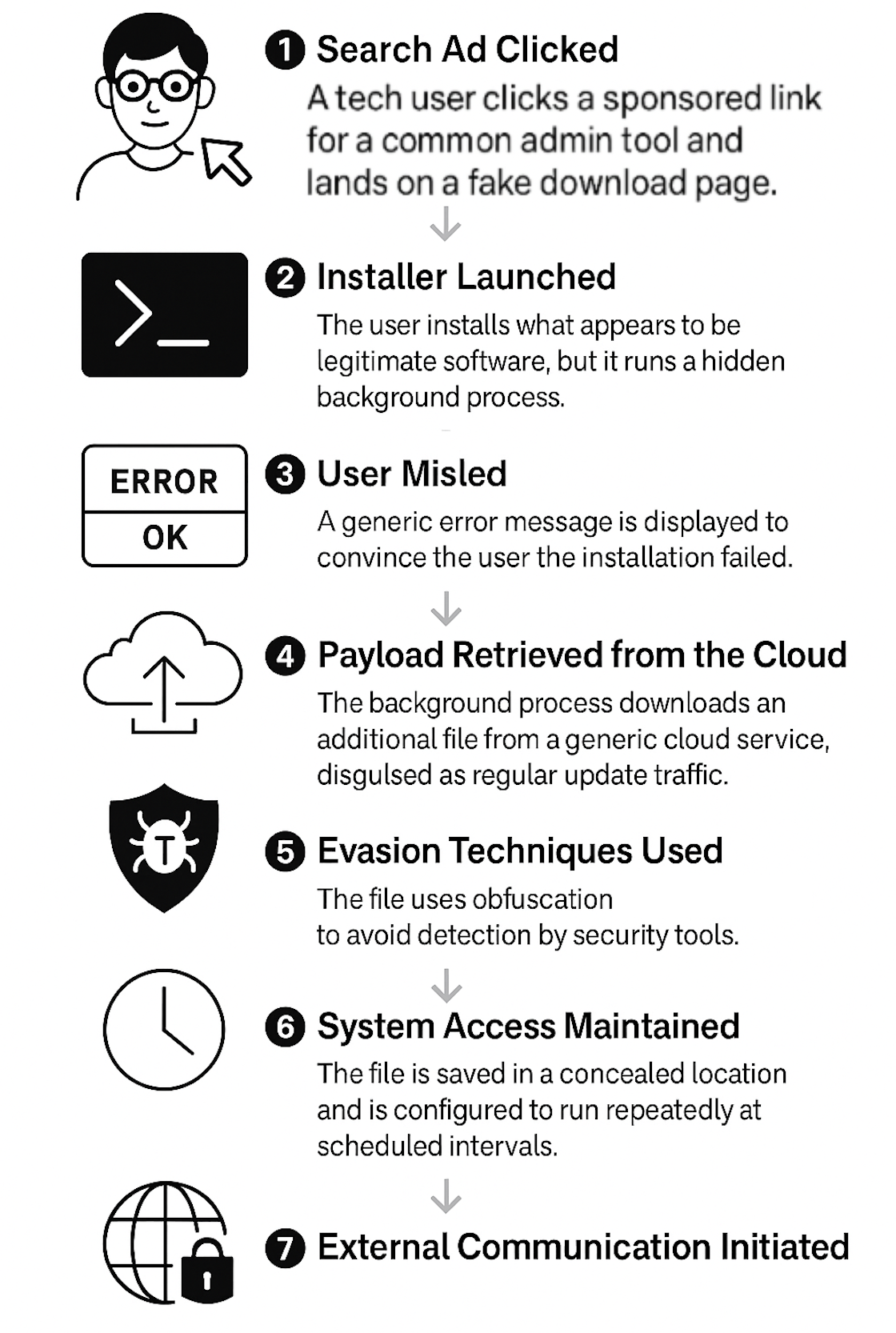
Oyster returned in July 2025 with a stealthier, modular loader delivered via malvertising that spoofed PuTTY and used a compromised real estate site to host a trojanized installer, fetching a second-stage DLL from a cloud CDN and maintaining persistence via a scheduled task. The campaign features AV evasion through GDI noise, cloud-based C2 traffic, hardcoded IP 45[.]86[.]230[.]77, and indicators including putty[.]us[.]com and skyviberealty[.]com. #Oyster #Rhysida
Keypoints
- Oyster malvertising campaign in July 2025 spoofed PuTTY and delivered a trojanized installer from a compromised WordPress real estate site (skyviberealty[.]com).
- The 2025 loader is modular: EXE fetches twain_96.dll at runtime via InternetOpenW from a hardcoded IP (45[.]86[.]230[.]77) and stores it under %APPDATA%.
- AV/EDR evasion uses GDI no-op calls, junk/dead functions, and inflated imports to confuse static analysis.
- Persistence is achieved by executing the DLL with rundll32.exe and creating a scheduled task “Security Updater” to run every three minutes.
- C2 communications are cloud CDN–masked with spoofed user agents (WordPressAgent, FingerPrintpersistent) and modified HTTP headers to blend with legitimate traffic.
- Campaign targets technical users/admins by impersonating trusted admin tools (PuTTY) rather than broad consumer tools.
- IOCs include trojanized PuTTY.exe installer, twain_96.dll, two SHA-256 hashes, domains putty[.]us[.]com and skyviberealty[.]com, and IP 45[.]86[.]230[.]77.
MITRE Techniques
- [T1190] Exploit Public-Facing Application – Compromised real estate WordPress site hosted the trojanized installer used in the malvertising delivery.
- [T1204] User Execution – Victims downloaded and executed a trojanized PuTTY installer from a spoofed site after clicking malvertising links.
- [T1105] Ingress Tool Transfer – EXE fetched the second-stage DLL (twain_96.dll) at runtime via InternetOpenW from hardcoded IP 45[.]86[.]230[.]77 (“…InternetOpenW API call to a hardcoded IP address: 45[.]86[.]230[.]77…”).
- [T1566] Phishing – Malvertising campaign used sponsored links and a spoofed PuTTY domain (putty[.]us[.]com) to lure technical users.
- [T1218] Signed Binary Proxy Execution – Used rundll32.exe to execute the malicious DLL (rundll32.exe %APPDATA%Roamingtwain_96.dll DllRegisterServer).
- [T1053] Scheduled Task/Job – Created a scheduled task “Security Updater” to re-launch the loader every three minutes for persistence (“…schtasks /Create /SC MINUTE /MO 3 /TN “Security Updater”…”).
- [T1071] Application Layer Protocol – C2 traffic disguised over cloud CDN with HTTP requests and spoofed User-Agent headers (WordPressAgent, FingerPrintpersistent) to blend with legitimate traffic.
- [T1027] Obfuscated Files or Information – GDI no-ops, junk functions, and dead code used to evade static analysis and inflate import tables (“…GDI noise and junk code…”).
- [T1573] Encrypted Channel – Use of cloud CDN and modified headers to mask C2 communications and blend with normal encrypted/legitimate traffic patterns.
Indicators of Compromise
- [Domain] Malvertising landing and download host – putty[.]us[.]com, skyviberealty[.]com
- [IP Address] C2 and DLL host – 45[.]86[.]230[.]77
- [File Name] Trojans and payloads – PuTTY.exe (trojanized installer), twain_96.dll (downloaded second-stage payload)
- [Hash (SHA-256)] Sample hashes – e25db8020f7fcadaec5dd54dd7364d8eaa9efd8755fb91a357f3d29bf2d9fbad (installer), 0bb664420f910961b579f5b9f9047d5d9de52f0bb06cd49e08747ecf9056f5d6 (DLL)
- [Persistence Artifact] Scheduled task – “Security Updater” set to run every 3 minutes
- [User-Agent] Suspicious headers observed – WordPressAgent (stage 1), FingerPrintpersistent (stage 2)
Read more: https://www.catonetworks.com/blog/cato-ctrl-oyster-malware-campaign/