
Anthropic announced OSS Scanner, a free opt-in service that sends AI-generated vulnerability reports directly to open source maintainers without human review, along with suggested fixes and PoCs. It also launched the Critical Infrastructure Defense Program to help OT providers and their partners identify and remediate long-standing security flaws in essential systems…
Category: Cyber Security News

Ninety percent of companies want to move toward autonomous IT operations in the next two years, but most still want a human to approve AI decisions and lack the visibility, automation, and governance needed to support that shift. The report also says AI is already changing service desk work, with many teams using it to detect and fix issues before employees notice. #agenticAI #AIcodeSprawl
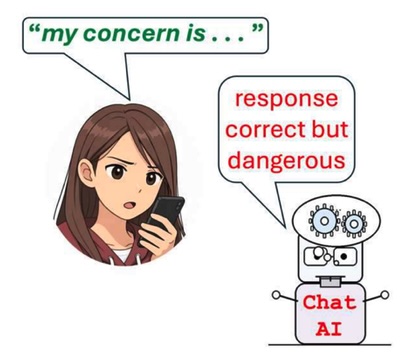
Researchers from George Washington University say they can model when an AI system may tip into producing undesirable outputs by analyzing its attention dynamics and prompt history. Their findings suggest early-warning controls could help reduce rogue behavior in open-weight transformer models, though it cannot be fully eliminated. #GeorgeWashingtonUniversity #NeilJohnson #FrankYingjieHuo…

Anthropic has launched a new critical infrastructure defense program that pairs Claude models and its security expertise with major cybersecurity companies to find and fix vulnerabilities in critical infrastructure and open-source software. The initiative includes a new opt-in scanning service for open source projects, aiming to speed up reporting, suggest patches, and strengthen defenses before weaknesses can be exploited. #Anthropic #Claude #Accenture #BoozAllen #CrowdStrike #Deloitte #Dragos #Hitachi #InsaneCyber #NozomiNetworks #PaloAltoNetworks #PwC #RockwellAutomation

Prasan Nepal, also known as “Trippy,” pleaded guilty to conspiracy to commit sexual exploitation of a child for his role in helping lead the 764 child sextortion network. Prosecutors say he and his co-conspirators used 764 and its 764 Inferno subgroup to groom, extort, and abuse minors across multiple jurisdictions. #764 #764Inferno #PrasanNepal #LeonidasVaragiannis #TheCom

JPCERT/CC warned that attackers are leaking personal data from Japanese organizations by abusing mobile app APIs, exploiting weak access controls, and taking advantage of known flaws such as CVE-2026-72898 in Metabase. The incidents have affected a wide range of public-facing and internal systems, including Park24, Monogatari Corporation, and other organizations that…

This week’s roundup shows attackers succeeding through a mix of greed, carelessness, and weak security, from exposed infrastructure and rogue ransomware affiliates to malicious developer packages and phishing lures. It also highlights deeper risks like vulnerable medical devices, predictable session cookies, and AI-targeted prompt injection hidden inside phishing messages. #Qilin #BraZetsu…

Hackers tied to Integrity Technology Group used scanners, password spraying, and multiple exploits to break into networks and steal email from government, healthcare, law enforcement, and religious organizations across Southeast Asia and beyond. The advisory says they also used tools like SoftEther, DCSync, and custom mail theft bots to maintain access…
OpenAI said it disrupted Russian and Iranian influence operations that used ChatGPT and other AI tools to create fake journalist personas, covert think tanks, and propaganda that reached mainstream media. The Russian campaign “Dark Clark” targeted Latin America with anti-Ukraine narratives, while the Iranian operation placed dozens of stories through legitimate outlets about the U.S.-Iran war. #OpenAI #DarkClark #SocialResearchCenter #Politology

Authorities accuse MonsterCloud owner Zohar Pinhasi of misleading ransomware victims with false claims of proprietary decryption tools while secretly paying ransoms on their behalf. Prosecutors say the scheme defrauded hundreds of clients of more than $19 million and turned their desperation into profit. #ZoharPinhasi #MonsterCloud #ProPublica #FBI #JusticeDepartment

The Justice Department and FBI seized hacking tools tied to Flax Typhoon and China-based Integrity Technology Group, aiming to cut off access to Microscan and FishHub. U.S. agencies said the group is using scanning tools, botnets, and spearphishing to target critical infrastructure and steal sensitive data worldwide. #FlaxTyphoon #IntegrityTechnologyGroup #Microscan #FishHub
Threat actors began exploiting CVE-2026-21589 shortly after technical details and PoC code were published, putting Atlassian self-hosted Data Center products at risk. When Jira is integrated with Crowd, leaked plaintext credentials can let attackers create users and gain Jira administrator access. #CVE-2026-21589 #Atlassian #Bitbucket #Confluence #Jira #Crowd #WatchTowr #Previdian…

Security awareness training remains widely used, but the article argues that generic, compliance-driven programs often fail to keep pace with modern social engineering and AI-enabled attacks. It concludes that training is most effective when combined with behavioral nudges, frequent refreshers, and stronger technical defenses rather than relied on as the sole…

Cisco released patches for 35 vulnerabilities across Meraki, License On-Prem, NX-OS, APIC, and Finesse, including more than a dozen critical-severity issues. The fixes address flaws ranging from memory corruption and improper access control to unauthenticated remote code execution, with Cisco saying there is no evidence of active exploitation. #Cisco #Meraki #LicenseOnPrem…
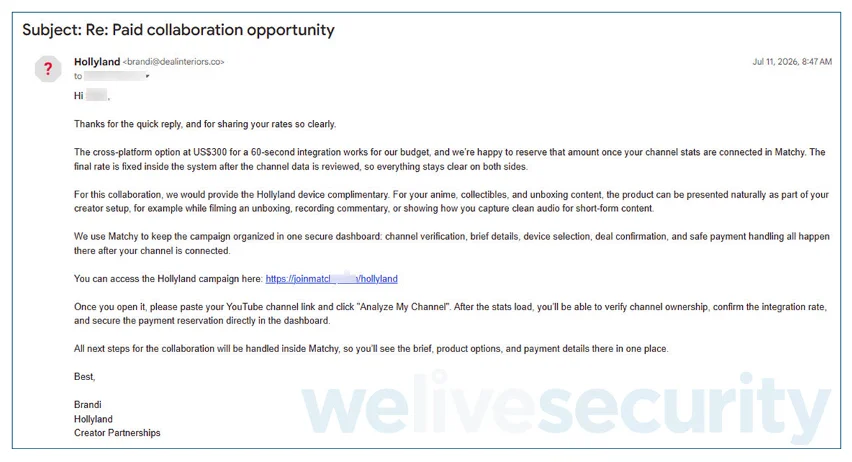
Scammers are impersonating brands like Hollyland, Nike, Spotify, and Maono to lure YouTube creators into fake sponsorship deals that end with a fraudulent Google sign-in page. Once victims enter their credentials and verification code, attackers can take over their Google services and YouTube channels, sometimes changing recovery details and backup codes to lock creators out. #Hollyland #Nike #Spotify #Maono #Google #YouTube