There have been 2 defacement incidents targeting schools in Indonesia. The attackers involved are identified as 4zz_30. #Indonesia…
Tag: INDONESIA

A Chinese hacking group, UNC6384, targeted Hungarian and Belgian diplomatic entities along with other European nations, utilizing spearphishing and exploiting recent Windows vulnerabilities to conduct cyber espionage. The campaign involved malware like PlugX and indicated a strategic focus on NATO, EU policies, and international diplomacy efforts. #UNC6384 #PlugX #MustangPanda #EuropeanDiplomacy #CyberEspionage…

There have been 11 defacement incidents targeted at various countries including Vietnam, Thailand, Indonesia, and India. The attackers involved are L4663R666H05T, Theremis, God Of Server, and lxrdk1773n. #Vietnam #Thailand #Indonesia #India…
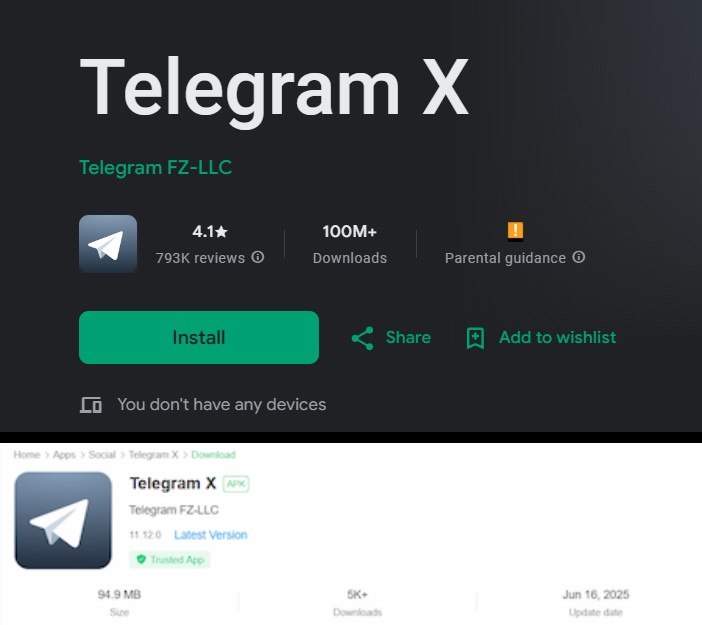
A new Android backdoor named Android.Backdoor.Baohuo.1.origin is rapidly infecting devices through fake versions of Telegram X, allowing attackers full control over user accounts. The malware, using the Redis database for command and control, has impacted over 58,000 devices worldwide, mainly in India, Brazil, and Indonesia. #Android.Backdoor.Baohuo #TelegramMalware…
There was 1 defacement incident targeting Indonesia. The attacker involved was HanzOFC. #Indonesia…
Victim Bayu Buana Travel in Indonesia has been targeted by the threat actor crypto24, who has claimed to have deployed ransomware on their systems. The attack has resulted in significant disruptions to their operations in #Indonesia.
There have been 13 defacement incidents targeting multiple countries including Indonesia, India, and others, with attackers such as Simsimi, OreoGans, MR.ROBERY27, Inside Alone7, and lxrdk1773n involved. These incidents highlight a widespread issue of cyber vandalism across various nations. #Indonesia #India…
There have been 2 defacement incidents targeting websites in two different countries. The attackers involved are Mr.Cypher4x and oghbnz. #Indonesia #Sudan…

Cybercriminals continue to exploit weak points such as misconfigurations, stale components, and trusted systems like OAuth to gain unauthorized access. Recent threats include sophisticated malware like Lumma Stealer and Vidar Stealer 2.0, as well as large-scale scams leveraging fake ads and open-source supply chain attacks. #LummaStealer #VidarStealer #OAuth #SupplyChainRisks…

The report details multiple cyber incidents affecting financial institutions worldwide, including database leaks, large-scale ransomware attacks (notably by Qilin), and statistics on malware and leaked account credentials targeting the finance sector. It highlights supply-chain infection vectors, data sale attempts on cybercrime forums, and recommends stronger data integrity verification and response strategies….
There are a total of 13 defacement incidents targeted at Brazil, Canada, Kenya, Indonesia, and Papua through attacks by Al-Haqq Security Digital Team, maw3six, and Irene. The attackers involved include Al-Haqq Security Digital Team, maw3six, and Irene. #Brazil #Canada #Kenya #Indonesia #Papua…

Operation Endgame (May 2024–May 2025) triggered multinational takedowns targeting loaders, botnets, and cash-out services, prompting selective Russian domestic enforcement that dismantled monetization nodes (e.g., Cryptex, UAPS) while higher-value ransomware operators with alleged intelligence ties (e.g., Conti, Trickbot) largely remained insulated. The resulting trust erosion in the underground drove tighter OPSEC, closed affiliate recruitment, rebrands, and decentralization as attackers adapted to sustained Western pressure and a conditional Russian “politics of protection.” #OperationEndgame #Cryptex #Conti #Trickbot
The content reports 3 defacement incidents targeting websites in Maldives, Philippines, and Indonesia. The attackers involved are M@rAz Ali and MR RYUZAKI EXCLUSV. #Maldives #Philippines #Indonesia…

Incransom has claimed a ransomware attack targeting Kumwell, a company dedicated to providing safety and security systems such as grounding, lightning, and surge protection across various critical infrastructure sectors. The attack potentially jeopardizes safety systems in countries including Thailand, China, India, Saudi Arabia, United Arab Emirates, Malaysia, Philippines, Vietnam, and Indonesia.
There have been multiple defacement incidents involving at least 10 targets across various countries, with attackers including M@rAz Ali, maw3six, DitzzXploit, KatakBeracun, and God Of Server. The targeted countries mentioned are Maldives, Philippines, Nigeria, Indonesia, and Argentina. #Maldives #Philippines #Nigeria #Indonesia #Argentina…