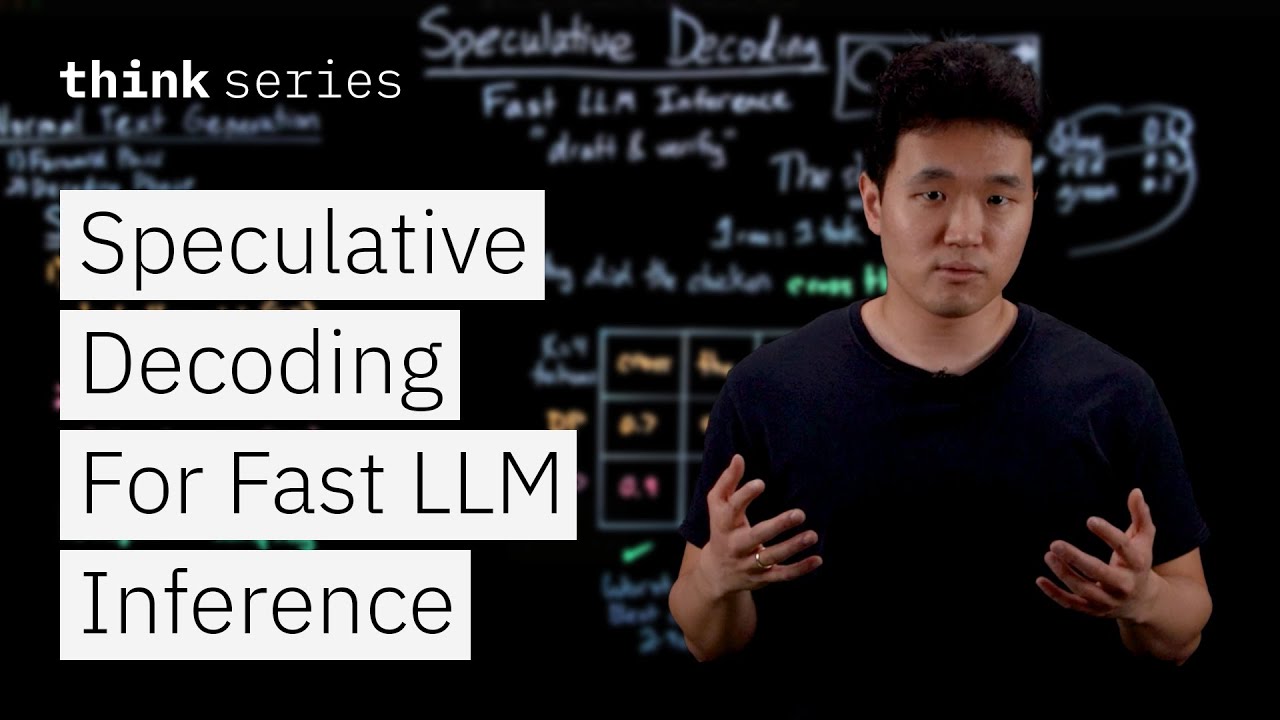
Speculative decoding significantly speeds up large language model inference by using a smaller draft model to predict future tokens, which are then verified by a larger target model in parallel. This method enhances efficiency, reduces latency, and maintains output quality, making LLMs more resource-effective. #SpeculativeDecoding #LLMSpeedup
Keypoints :
- Speculative decoding involves using a smaller draft model to generate multiple token predictions ahead of time.
- A larger target model verifies these predictions in parallel to ensure accuracy.
- The process includes three main steps: token speculation, parallel verification, and rejection sampling.
- Acceptance or rejection of tokens depends on comparing probabilities from both models, optimizing output quality.
- This technique allows generation of multiple tokens per model run, substantially increasing inference speed.
- The method improves GPU resource utilization and decreases computational costs without sacrificing output quality.
- Research continues to advance these optimizations, making LLMs more efficient and effective.
- Youtube Video: https://www.youtube.com/watch?v=VkWlLSTdHs8
- Youtube Channel: IBM Technology
- Youtube Published: Wed, 04 Jun 2025 11:00:56 +0000