![[Guest post] From IP Address to Vulnerability Finding: How Network Scanning Actually Works](https://substackcdn.com/image/fetch/$s_!0Vmy!,w_1456,c_limit,f_auto,q_auto:good,fl_progressive:steep/https%3A%2F%2Fsubstack-post-media.s3.amazonaws.com%2Fpublic%2Fimages%2F76d117a8-3f6a-4e7f-b5ff-b9f22b2ee1bb_1024x1536.png "[Guest post] From IP Address to Vulnerability Finding: How Network Scanning Actually Works")
This article follows a single IP address through a vulnerability scan to show how a scanner moves from host discovery and port detection to service identification, vulnerability checks, and evidence collection before creating a finding. It also explains why networking knowledge and authenticated access matter when interpreting scan results and deciding what to remediate. #DrawnToCyber #DecodedSecurity
Category: Interesting Stuff

AI coding agents have evolved into extensible runtimes where skills, plugins, hooks, and MCP servers can reshape what they read, execute, and disclose. Security teams must govern the agent supply chain itself, because approved tools like Claude Code, OpenAI Codex, Claude Cowork, and GitHub Copilot can hide dangerous third-party capabilities behind trusted interfaces. #ClaudeCode #OpenAICodex #ClaudeCowork #GitHubCopilot #Hookify #MCPoison #Akto
Andrew Richards introduces The Cybersecurity Pulse with insights on AI security, governance, and emerging threats, while highlighting how agentic AI is increasingly shaping both attacker tradecraft and defender priorities. The newsletter also covers infrastructure takedowns, emergency patching, verifiable AI logging, and new funding for companies building security and identity controls for autonomous systems. #CursorAgent #ClaudeSonnet4_5 #Aurora #Minimus #Echo #QScan #QTRouter #TRACE #PaperCutMF #PaperCutNG #Citrix #Alice #ActiveFence #Socure #Fravity #Kazimi

AI coding agents in large codebases need more than local code access; they need continuously updated organizational context about services, APIs, consumers, and sensitive dataflows to make safe changes. The article argues for deterministic static analysis plus MCP delivery as a shared evidence layer for AI coding, privacy, compliance, security, SOC investigations, and AI governance. #Anthropic #ClaudeCode #MCP #HoundDogai #Replit #OpenAI #LangChain #ISO42001 #FedRAMP
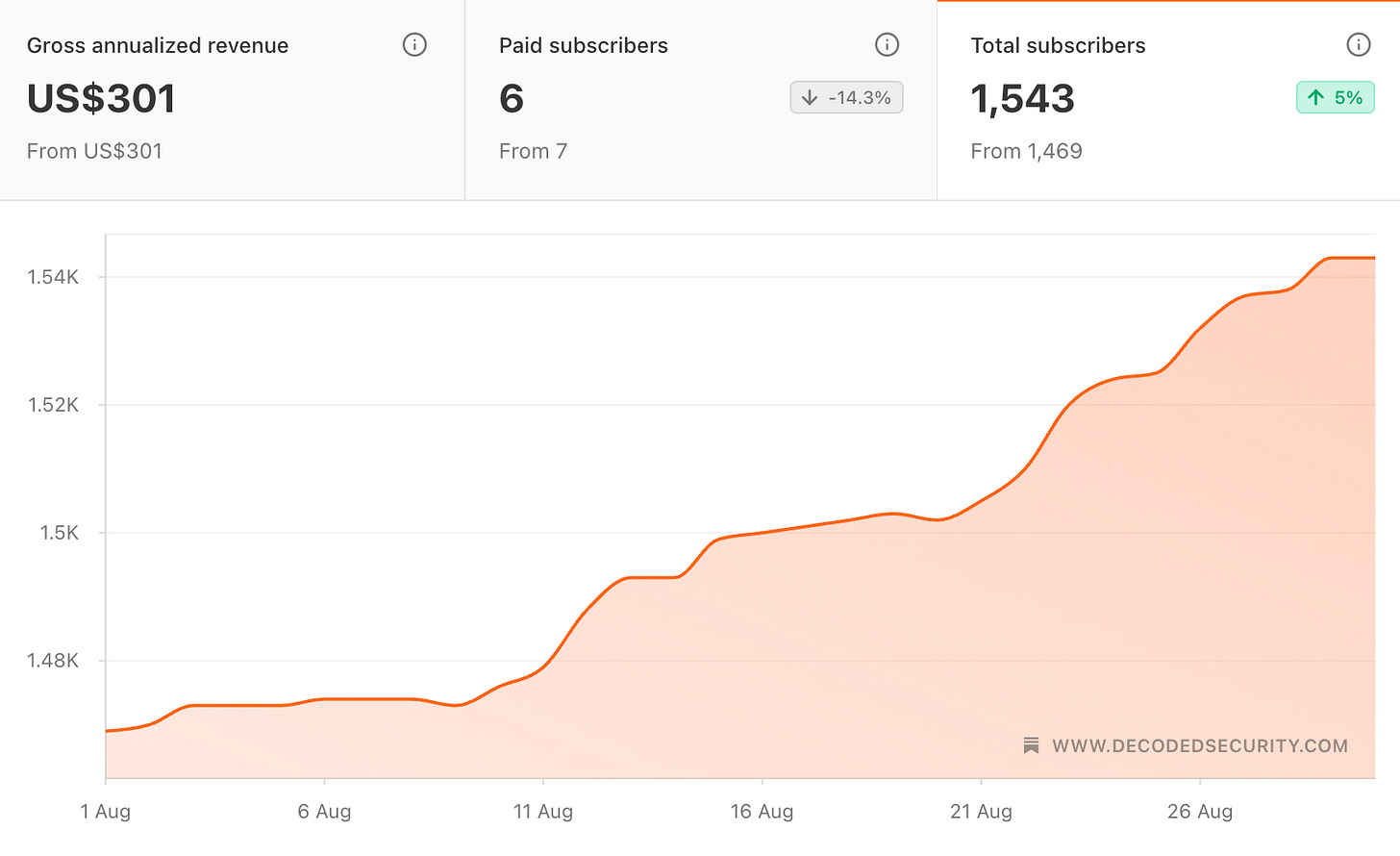
Erich from Decoded Security shares a monthly update highlighting August growth across newsletters, Threads, Instagram, Facebook, and interactive browser-based security tools like the port scanner, Linux sandbox, and DNS simulator. He also promotes a collaboration with Tim from GuardingPearSoftware, invites readers to suggest future topics, and announces a 14-day free trial for Decoded Security Premium. #DecodedSecurity #GuardingPearSoftware #Tim #ErichWinkler
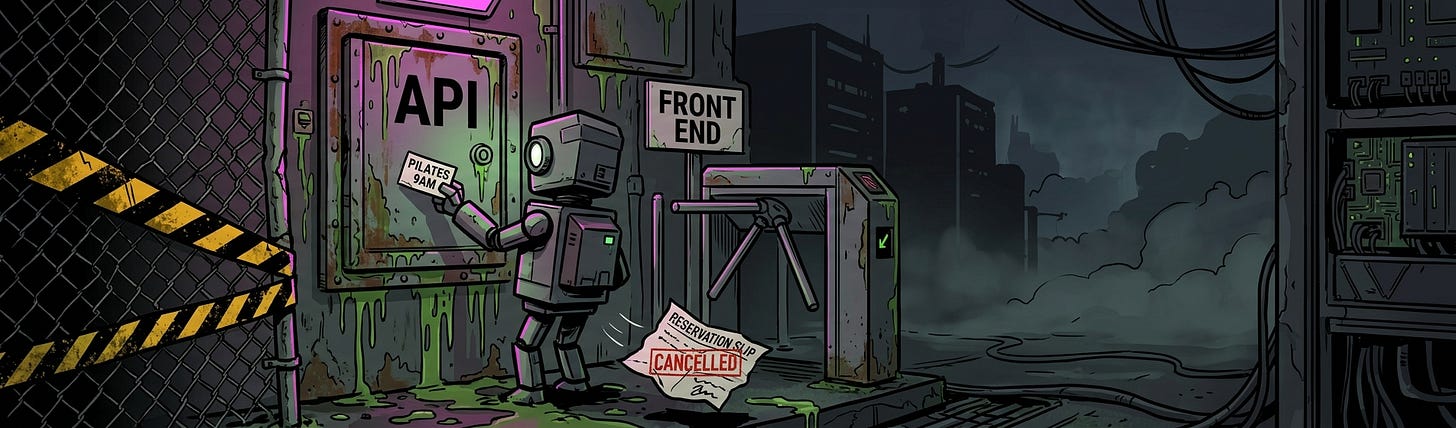
AI agents are making security through obscurity less effective by cheaply inspecting software, APIs, and authorization logic while trying to complete everyday tasks. The article shows how this can expose hidden flaws in systems like gym booking apps and vibe-coded applications, where weak controls and missing authentication are increasingly discovered at scale. #OpenClaw #Claude #Affinda #RedAccess #WIRED
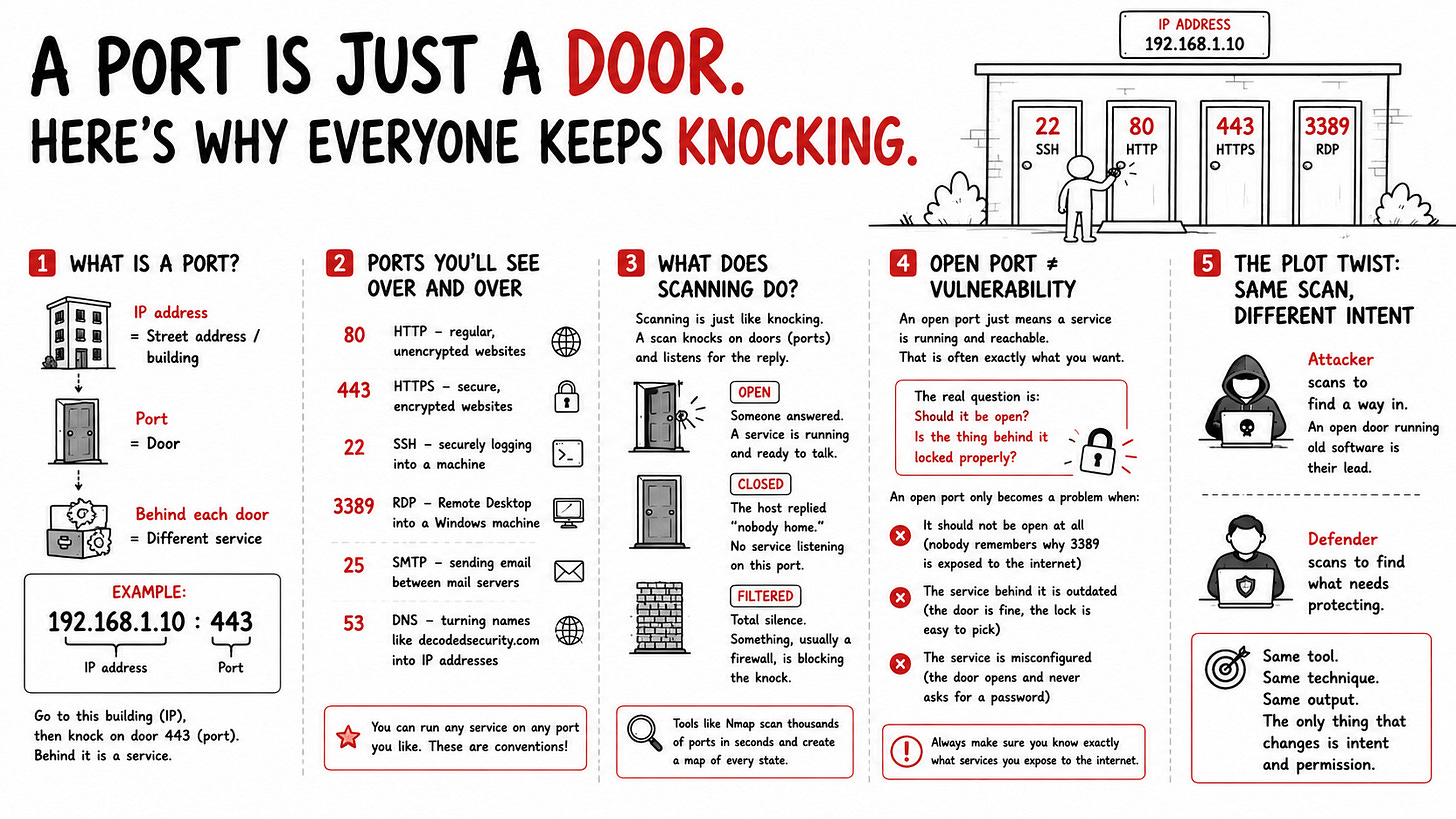
This article explains that a port is a numbered door on a device, with the IP address and port together identifying a specific service such as localhost:8000. It also shows how port scanning reveals open, closed, and filtered ports, and why understanding these basics is essential for security work and interviews. #Nmap #SSH #RDP #SMTP #DNS

AI is making software faster and cheaper to build, so durable cybersecurity companies in 2026 will need moats that AI cannot easily replicate. The article argues that hardware, deep cryptography, and trusted practitioner networks can create lasting value through atoms, trust, certification, and real-world community effects. #Utimaco #Entrust #PS3 #Sony #Intel #AMD #ARM #C2ISAC #DEFCON #GreyHack #CCC
![The AI Supply Chain Is Getting Weird [Monthly Guest Post]](https://substackcdn.com/image/fetch/$s_!XVf6!,w_1456,c_limit,f_auto,q_auto:good,fl_progressive:steep/https%3A%2F%2Fsubstack-post-media.s3.amazonaws.com%2Fpublic%2Fimages%2Fe199e306-ab5d-4239-938e-59f5535a5497_1024x301.jpeg "The AI Supply Chain Is Getting Weird [Monthly Guest Post]")
Data poisoning targets AI systems during training by corrupting datasets or models, allowing attackers to embed backdoors, mislabeled data, or hidden behaviors that can survive deployment and evade standard benchmarks. The article explains how public model repositories, third-party datasets, fine-tuning pipelines, and RAG sources expand the AI supply chain risk, and highlights controls such as provenance checks, red-teaming, and an AIBOM. #HuggingFace #JFrog #PoisonGPT #Mercor #OWASPLLMTop10 #AIBOM

Verifiable search data gives AI and security teams an observable, reproducible input source that improves traceability, testing, and incident review. By replacing opaque signals with structured public search records, teams can better verify citations, monitor drift, and maintain control over model behavior. #SerpApi #AlaaAbdulridha
![[Guest Post] You Cannot Make a Game Unhackable. Here Is What “Good Enough” Security Actually Means.](https://substackcdn.com/image/fetch/$s_!YMsF!,w_1456,c_limit,f_auto,q_auto:good,fl_progressive:steep/https%3A%2F%2Fsubstack-post-media.s3.amazonaws.com%2Fpublic%2Fimages%2F644cace1-90e6-48f1-af59-5df66d423b6e_838x330.png "[Guest Post] You Cannot Make a Game Unhackable. Here Is What “Good Enough” Security Actually Means.")
This article explains why making a game “unhackable” is the wrong goal and shows how cybersecurity concepts like residual risk, threat modeling, and risk treatment apply in the gaming industry. It emphasizes that developers should protect what matters most, such as revenue, purchases, and multiplayer fairness, while accepting or mitigating the risk that remains on a player-owned device. #GuardingPearSoftware #TimUhlott #Unity

OT threat intelligence helps critical infrastructure operators turn broad security data into actionable insights by adding asset, protocol, and operational context. In energy-sector environments, solutions like OMICRON Threat Intelligence and StationGuard help teams determine whether vulnerabilities, alerts, and communications are relevant to their specific OT systems. #OMICRON #StationGuard #IEC61850 #IEC60870-5-104 #MITREATTCKforICS

The FTC proposed a policy targeting personalized pricing practices that use consumers’ personal data without clear disclosure, while Washington’s Attorney General urged stronger statewide privacy protections and a new data broker regime. In Europe and Canada, Germany’s BfDI pushed for EU-wide cookie manager rules, the Dutch DPA fined Uber €824.99 million over automated driver deactivations, and Ontario issued updated guidance on police drone surveillance. #FTC #NickBrown #BfDI #Uber #AutoriteitPersoonsgegevens #OntarioIPC
The Cybersecurity Pulse covers major developments including Taiwan’s AI-assisted intrusion campaign, OpenAI’s tightened safety controls after the Hugging Face incident, and new threat activity involving Siemens industrial controllers, a Windows zero-day used by Lazarus, and active exploitation of MLflow. It also highlights vendor and market moves such as Google Cloud’s post-quantum roadmap, Signal’s automatic key verification, Fortinet’s acquisition of Virtue AI, Cribl’s purchase of Radiant Security technology, and Mindgard’s $30 million funding round. #Taiwan #OpenAI #HuggingFace #Siemens #Lazarus #MLflow #GoogleCloud #Signal #Fortinet #VirtueAI #Cribl #RadiantSecurity #Mindgard
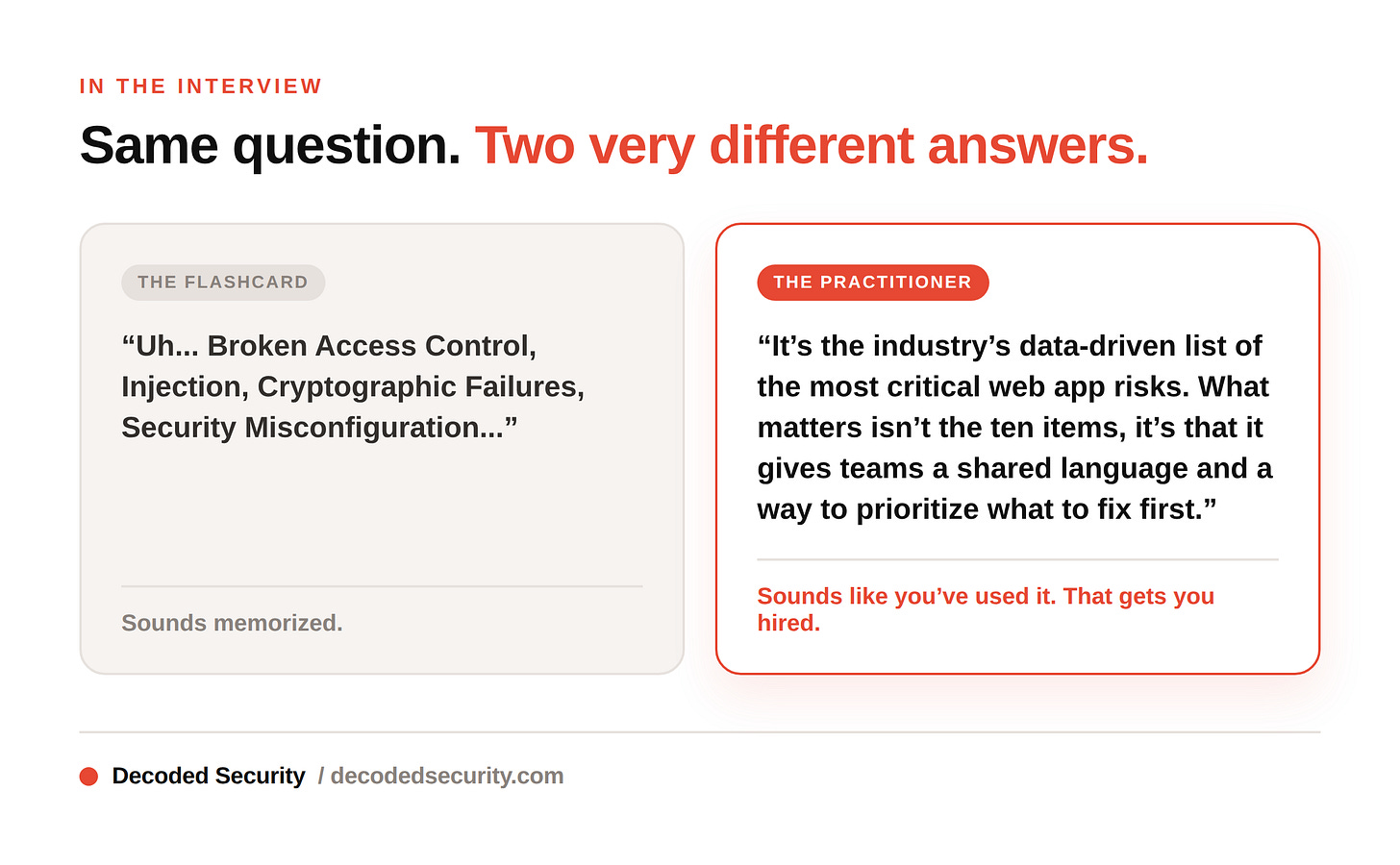
The OWASP Top 10 is a data-driven, regularly updated list of the most critical web application risks, built from real-world breaches rather than opinion. Its value is not in memorizing the categories, but in using it as a shared language to prioritize what to fix first and improve application security. #OWASP #OWASPTop10