
GMO GlobalSign launched TLS Connect, a Certificate Lifecycle Management (CLM) tool designed for SMBs to automate public trust TLS certificate deployment and renewal. TLS Connect offers on-premises centralized management, certificate discovery, ACME and Atlas/GCC integrations to help SMBs avoid outages, meet compliance, and adapt to shortened TLS certificate lifespans; #TLSConnect #GMOGlobalSign
Category: Cyber Security News
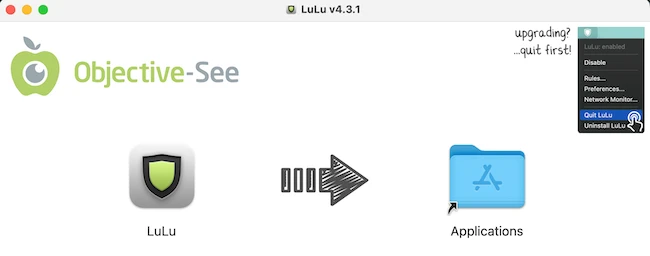
LuLu is a free, open-source firewall for macOS that lets you monitor and control outgoing app connections. It prompts to allow or block connection attempts, remembers rules, and includes the Netiquette monitor for live network activity. #LuLu #macOS

This article highlights a collection of free, open-source security and compliance tools that help teams detect threats, manage secrets, secure AI agents, audit cloud environments, and automate security workflows across development and operations. Coverage includes projects for AI agent governance and detection, secrets and vulnerability scanning, monitoring and firewall platforms, and incident response automation #OpenClaw #MoltBot

The article describes how long-term romance and “pig-butchering” scams—exemplified by Shimon Hayut, the “Tinder Swindler”—leave victims financially ruined and emotionally traumatized. Speakers and advocates at RSAC urge empathy-first victim support, stronger anti-fraud measures, and cross-industry cooperation to prevent and respond to these schemes. #PigButchering #TinderSwindler

South Korea’s Personal Information Protection Commission fined marriage brokerage service Duo 1.197 billion won (about £600,000) plus an administrative penalty after a January 2025 breach exposed the personal data of 427,464 members. An infostealer on an employee’s work PC stole database credentials, allowing the attacker to exfiltrate sensitive member information and publish it on the dark web, with regulators citing failures to encrypt resident registration numbers and passwords, improper data retention, and delayed reporting. #Duo #PersonalInformationProtectionCommission

Cybersecurity Threat Research ‘Weekly’ Recap. The report highlights activity across supply chains, APT intrusions, phishing, ransomware, edge and IoT infrastructure, and AI-enabled exploitation, noting Open VSX sleeper extensions delivering GlassWorm and npm supply-chain worms. The analysis also covers covert C2, credential theft, and domain spoofing in developer ecosystems, with groups such as GopherWhisper, Tropic Trooper, Mustang Panda, UNC6692, and others deploying staged loaders, custom beacons, shadow firmware, and crypto drainers. #GlassWorm #GopherWhisper

Itron, Inc. disclosed that an unauthorized third party accessed some of its internal systems on April 13, 2026, prompting activation of its cybersecurity response plan and notification of law enforcement while external advisors supported the investigation. The company says the activity has been blocked with no observed follow-up, no material disruption to business or customers so far, and the investigation into scope and impact continues while incident-related costs are expected to be largely covered by insurance. #Itron #electricitygrids

UNC6692 uses social engineering and Microsoft Teams helpdesk impersonation to deploy a custom malware suite called “Snow,” which combines a Chrome extension, a tunneler, and a Python backdoor to establish covert persistence and relay commands. The group conducts deep network compromise—dumping LSASS, using pass-the-hash, and exfiltrating Active Directory data (via FTK Imager and LimeWire) to steal credentials and take over domains. #Snow #UNC6692

This weekly roundup covers major developments across malware campaigns, supply-chain and cloud breaches, AI-driven threats and defenses, and significant security patches. Notable items include the NGate NFC campaign in Brazil, new Mirai variants like “tuxnokill”, ProxySmart-powered SIM farm proxy networks, the Vercel breach, and defensive tools such as SmokedMeat and Scenario. #NGate #Mirai

Daily Recap, AI now drives the top initial-access vector with phishing accounting for 35% of Q1 2026 compromises, and researchers warn that hidden indirect prompt injection is spreading across the open web to manipulate LLM agents. It also covers vulnerability advisories (KEV) involving SimpleHelp, Samsung MagicINFO 9 and D-Link DIR-823X, China-linked espionage with GopherWhisper and Song Wu, extortion and fraud cases including BlackFile and SMS Blaster, and policy moves like Section 702 and Windows Update controls. #GopherWhisper #SongWu

Microsoft is simplifying and making the Windows Insider Program more transparent to address reliability concerns in Windows 11 by reducing its channel complexity and exposing feature controls. The program will consolidate into two channels—Experimental and Beta—with feature flags, phased migrations for existing Insiders, and updated Windows Update controls to give users more direct access to features and update pauses. #WindowsInsiderProgram #Windows11

Anthropic’s Project Glasswing and the Mythos Preview model demonstrated that an AI can “read” code and find a 16-year-old FFmpeg vulnerability that five million automated fuzzer passes missed. The episode shows that industry tools primarily enumerate known patterns while real risk often comes from misconfigurations, leaked credentials, and forgotten assets, so teams must validate inventories and posture continuously. #MythosPreview #ProjectGlasswing
Threat group UNC6692 uses email bombing and Microsoft Teams helpdesk impersonation to trick victims into installing a dropper that deploys a custom malware suite called Snow. The Snow toolset—comprising SnowBelt, SnowGlaze, and SnowBasin—provides stealthy persistence, WebSocket/SOCKS tunneling, and remote-command and data-exfiltration capabilities that enabled credential theft and domain takeover. #UNC6692 #Snow

Researchers at SentinelOne uncovered a previously undocumented Lua-based Windows sabotage framework called fast16 that dates to 2005 and embeds a Lua 5.0 virtual machine with encrypted bytecode. The toolkit used a carrier (svcmgmt.exe), an auxiliary ConnotifyDLL, and a kernel driver (fast16.sys) to intercept and corrupt high-precision calculations and propagate across Windows…

Write 2 sentences summarizing the content. At the end, add hashtags for specific keywords mentioned in the article—such as names of malware, threat actors, or affected organizations/systems. Avoid general terms like #malware, #ransomware, or #cybersecurity. Use this format: #Keyword1 #Keyword2…