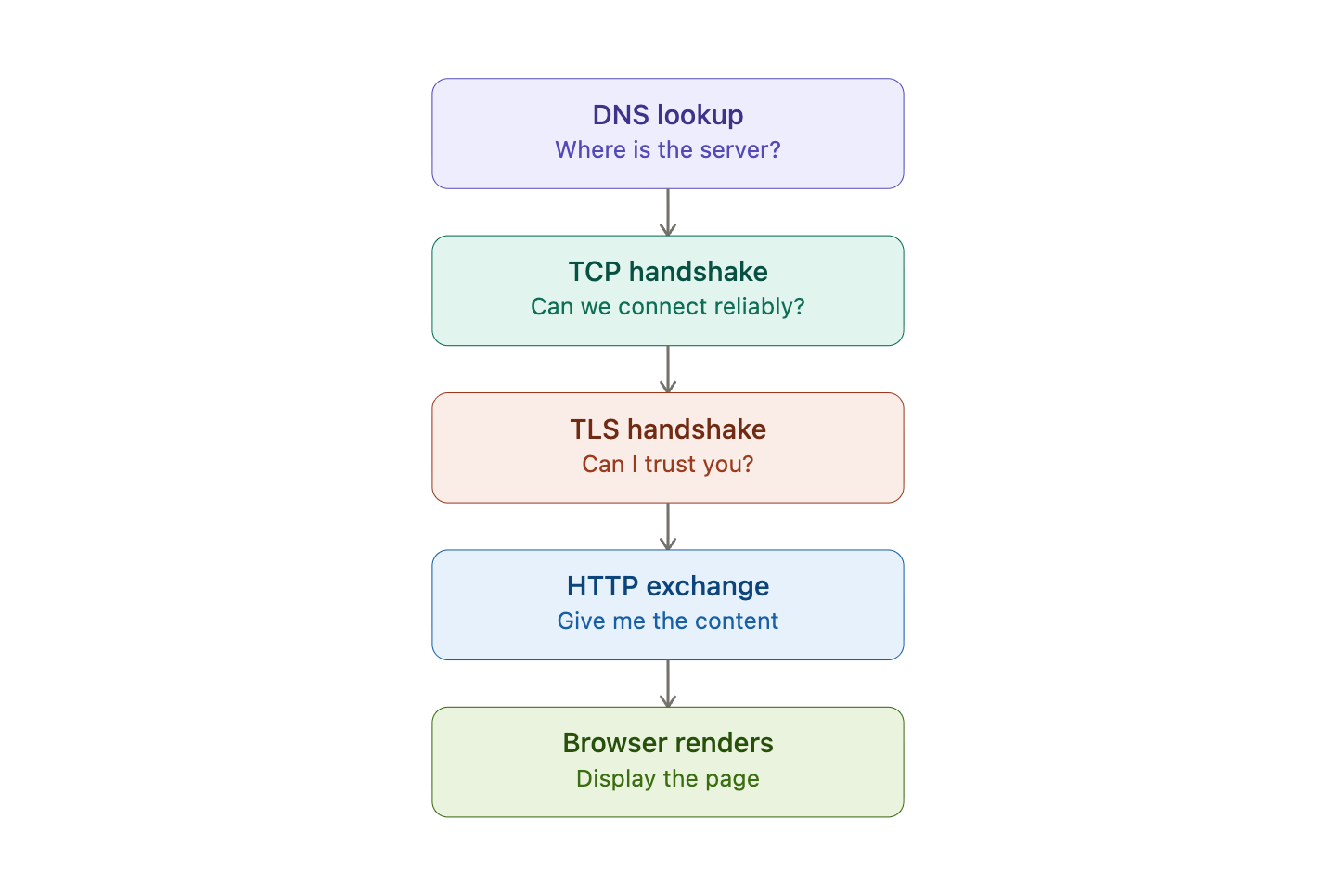
This article explains, step by step, what happens from URL parsing to browser rendering when you open a website, outlining the dependency chain DNS → TCP → TLS → HTTP → Rendering. It also breaks down the TCP three-way handshake, the TLS certificate and key-exchange process, and offers a Docker-based lab to practice DNS resolution, HTTP requests, and TLS negotiation. #DNS #TLS
Keypoints
- The full request flow is a chain: DNS → TCP → TLS → HTTP → Rendering.
- URL parsing (scheme, host, path, query) determines the communication stack and target server.
- DNS resolves a domain to an IP via a lookup chain and caching, stopping when a resolver can answer.
- TCP establishes a reliable connection with a three-way handshake: SYN, SYN-ACK, ACK.
- TLS authenticates the server with certificates, performs key exchange to derive session keys, and only then is HTTP exchanged; a Docker lab is provided to practice these steps.
Read More: https://www.decodedsecurity.com/p/what-actually-happens-when-you-open