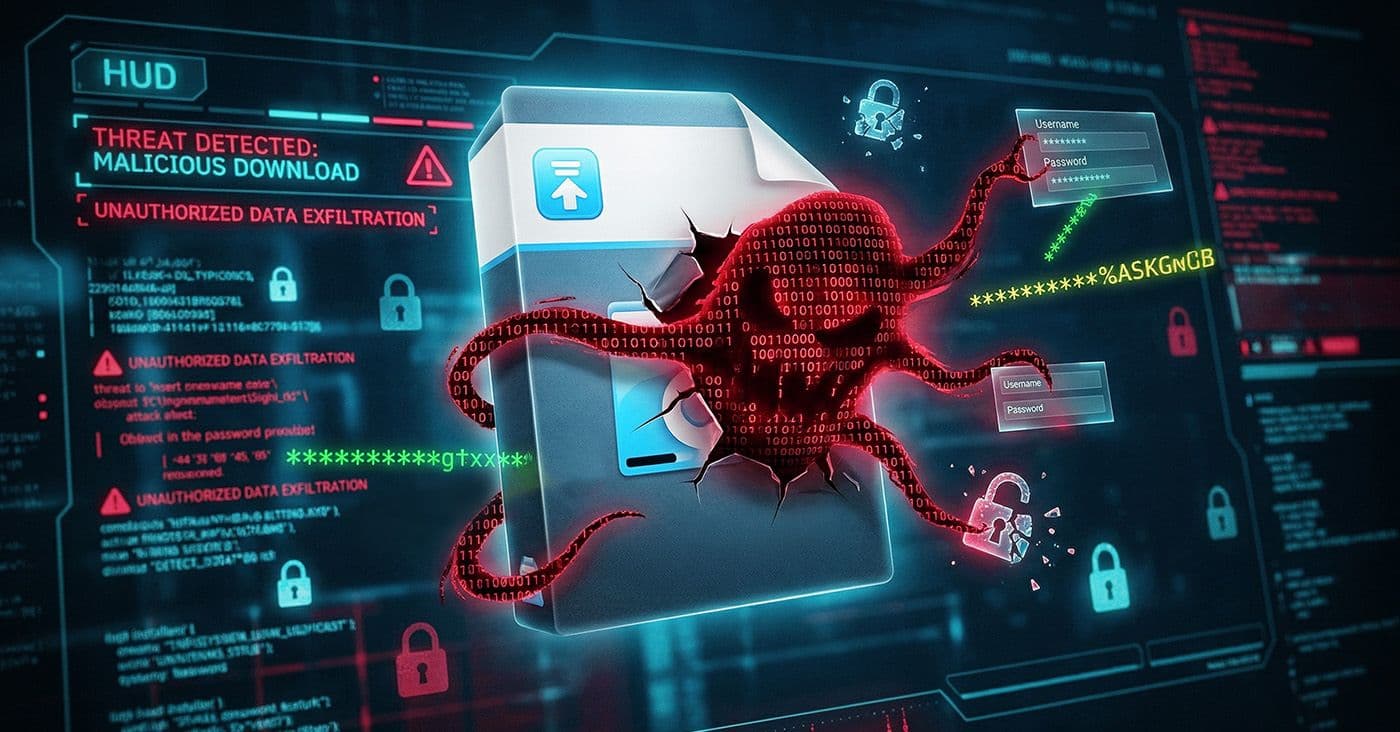
The Ghost campaign abused malicious npm packages that display realistic fake npm install logs to phish for sudo passwords and then download and execute a final-stage RAT that steals crypto wallets and sensitive data. ReversingLabs discovered multiple malicious packages (published by user “mikilanjillo”) that retrieve decryption keys and payload URLs from a Telegram channel or a teletype.in web3 post and execute the RAT using the phished sudo credentials. #GhostCampaign #ReversingLabs
Keypoints
- ReversingLabs identified a supply-chain campaign called the “Ghost campaign” that used malicious npm packages to deploy a final-stage remote access trojan (RAT).
- Malicious packages (seven packages with multiple versions) were published by the npm user “mikilanjillo” and reused code across versions while adding phishing features.
- Packages display fabricated npm install output (fake logs, progress bars, random delays) to hide malicious activity and lull victims into trusting the installation process.
- The packages phish for the victim’s sudo password by prompting for it during the fake installation output; that password is later used to run the final-stage payload with elevated privileges.
- Final-stage payload URLs and part of decryption keys are retrieved from a Telegram channel (and in one case from a teletype.in web3 contract); the payload is decrypted with a hardcoded string plus the retrieved key.
- The final-stage RAT is designed to steal crypto wallets and sensitive data and to accept commands from a C2 server; some package versions include an additional “decryptor” file to assist theft functionality.
- Evidence suggests this could be an early test run or a first wave of a wider campaign using similar techniques, with similarities noted to a JFrog-documented package (@openclaw-ai/openclawai).
MITRE Techniques
- [T1105 ] Ingress Tool Transfer – The campaign downloads the final payload and decryption key from external services: ‘The URL for the final payload and part of the key needed for the final payload’s decryption is downloaded from a Telegram channel.’
- [T1102 ] Web Service – Use of public web services for hosting keys/URLs and C2: ‘Figure 3: Telegram channel from which key and final stage URL are downloaded’ and use of ‘teletype.in’ to hide URL and key.
- [T1548.003 ] Sudo and Sudoers (Abuse Elevation Control Mechanism) – The attackers phish for and reuse the victim’s sudo password to execute the final-stage payload with elevated privileges: ‘The user installing the package is prompted to enter their sudo password…it is then saved locally and executed using the sudo password phished from the user.’
- [T1027 ] Obfuscated Files or Information – The packages hide true behavior behind fake and misleading console output and randomized progress indicators to evade detection: ‘all the information and strings output to the console is fake and inaccurate’ and ‘displaying fake npm install logs.’
- [T1204.002 ] User Execution: Malicious File – The malicious payload executes after package installation, relying on the user installing the package: ‘the malicious payload executed after the package is installed.’
- [T1078 ] Valid Accounts – Use of harvested credentials to run malicious components and perform privileged actions: ‘the sudo password phished from the user…is then saved locally and executed using the sudo password phished from the user.’
- [T1005 ] Data from Local System – Final-stage RAT capabilities include stealing crypto wallets and sensitive data from the host: ‘the final-stage malware is a RAT designed for stealing crypto wallets and sensitive data.’
Indicators of Compromise
- [Package names ] Malicious npm packages observed in the campaign – react-state-optimizer-core, [email protected], and 4 more packages (total seven packages across multiple versions).
- [Publisher account ] npm user that published the malicious packages – mikilanjillo.
- [Domains / Web services ] Locations used to host final-stage payloads and keys – Telegram channel (used to deliver URL and key), teletype.in web3 contract (used by [email protected]).
- [File names ] Files included with packages that assist execution/stealing – decryptor (additional argument used to run final-stage RAT).
- [Related package ] Previously observed similar package noted in research – @openclaw-ai/openclawai (as documented by JFrog) referenced as sharing techniques with this campaign.
Read more: https://www.reversinglabs.com/blog/npm-fake-install-logs-rat