Threat hunting is a proactive, human-driven process that searches networks and endpoints to identify hidden or emerging threats missed by automated defenses. Combining intelligence, data analysis, and skilled hunters—supported by tools like Huntress Managed SIEM—enables organizations to detect and contain threats earlier and convert successful hunts into automated detections. #Huntress #HuntressManagedSIEM
Keypoints
- 58% of businesses lost at least $100,000 to cybercrime in 2025, underscoring the financial impact and need for proactive defenses.
- Threat hunting is proactive and human-driven, aiming to find hidden or unknown threats that bypass automated security controls.
- Threat hunting differs from threat detection (reactive, alert-driven) and threat intelligence (context and feeds) but all three complement each other.
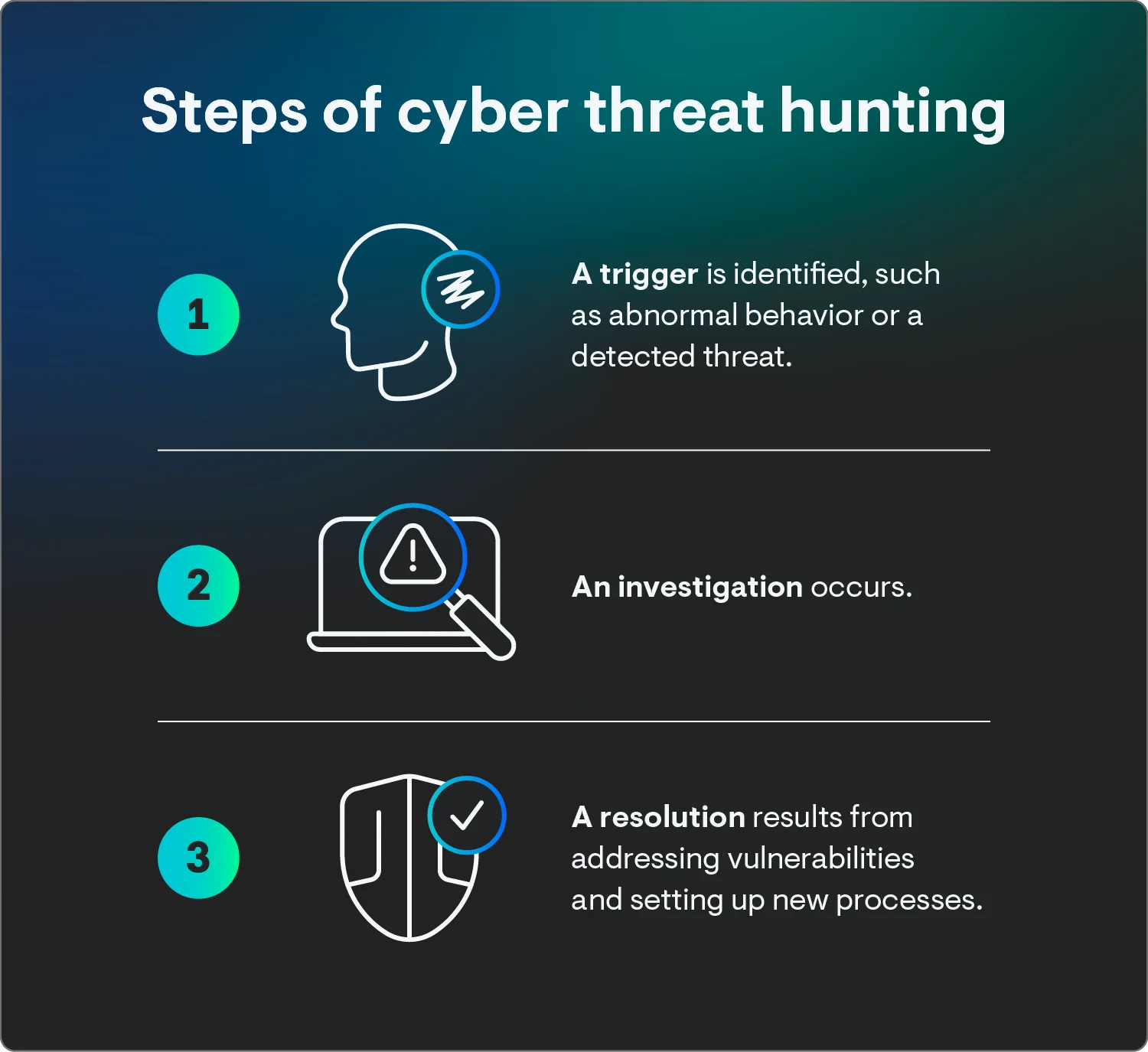
- The typical threat hunting process includes triggers (alerts or anomalies), investigation (data analysis and ML-assisted pattern recognition), and resolution (patching, removing artifacts, updating detections).
- Hunts can be structured (TTP-focused) or unstructured (data-driven), and methodologies include intelligence-, data-, knowledge-driven, and hybrid approaches.
- Best practices include knowing your environment, using threat intelligence, continuous learning, fostering an adversarial mindset, dedicating resources, and automating successful hunts (“Hunt Once, Detect Forever”).
MITRE Techniques
Indicators of Compromise
- [File names ] intelligence examples used for hypothesis generation – malicious.exe, invoice.docx
- [File hashes ] intelligence examples used to match known malware artifacts – e3b0c44298fc1c149afbf4c8996fb92427ae41e4649b934ca495991b7852b855 (SHA-256 placeholder), d41d8cd98f00b204e9800998ecf8427e (MD5 placeholder)
- [IP addresses ] used as IOC examples in intelligence-driven hunts – 203.0.113.45, 198.51.100.22
- [Domains ] domain-based indicators for campaign tracking and blocking – badactor-example[.]com, malicious-c2[.]net
- [Email addresses ] used in intel for phishing/campaign attribution – [email protected], spoofed-payments@fakebank[.]com
- [Campaign names ] contextual identifiers referenced as hunt triggers – “campaign-alpha”, “spearphish-2025”
Read more: https://www.huntress.com/blog/what-is-threat-hunting