Sysdig Secure AI uses agentic cloud security to continuously triage vulnerability backlogs, trace 2,731 SLA-breaching findings in a Node.js base image to one fix, and route the remediation through human approval into Jira ticket DEJI-342. The same capability also runs headless in Claude via the Sysdig MCP server, using runtime data to prioritize issues by exploitability, KEV status, and reachability. #SysdigSecureAI #Jira #Claude #SysdigMCPServer #DEJI342
Keypoints
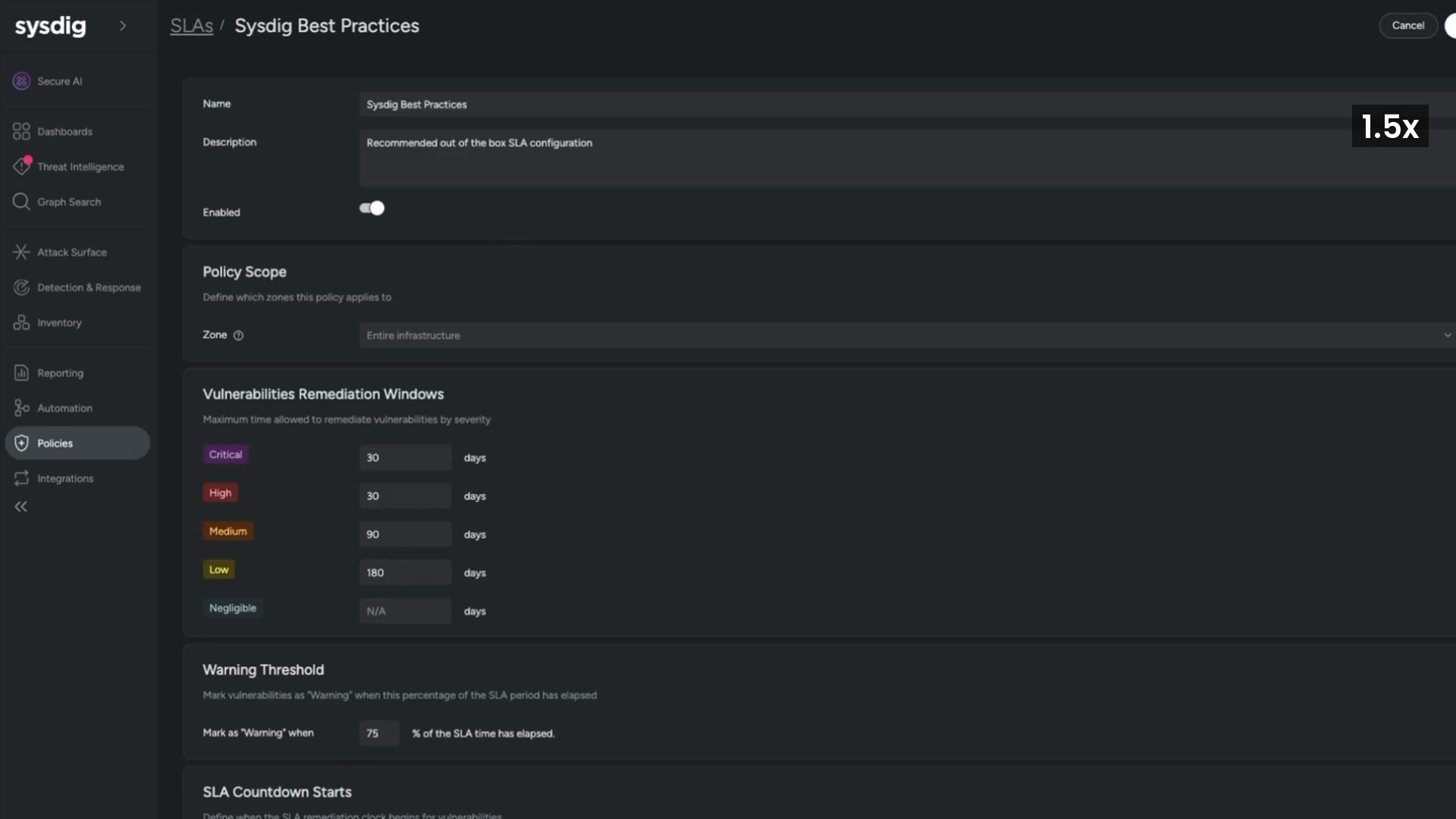
- Sysdig Secure AI turns SLA policies into standing plans such as SLA Compliance and Reduce Exposure Time.
- In a live demo, agents triaged a backlog of 119,443 findings and traced 2,731 SLA-breaching findings to one Node.js base-image fix.
- The affected image was node:17.9.1-bullseye, which had 273 critical findings and was 90 days past the SLA deadline.
- The system prioritizes findings using runtime reachability, exploitability signals, EPSS probability, and CISA KEV status instead of relying only on CVSS.
- A human remains the approval gate: the agent drafts the remediation ticket, and a person approves it before changes proceed.
- The approved remediation was created as Jira ticket DEJI-342 with full context, ownership, and tracking information.
- The same agentic workflow is exposed headless through the Sysdig MCP server for use in Claude and other MCP-capable assistants.
MITRE Techniques
- [T1595.002 ] Vulnerability Scanning – The workflow analyzes exposed software flaws and ranks them for remediation (‘a scanner will happily hand you six figures of findings by lunchtime’).
- [T1068 ] Exploitation for Privilege Escalation – The system prioritizes vulnerabilities based on real exploitability and KEV/EPSS signals (‘rank the finding by real exploitability’).
- [T1195 ] Supply Chain Compromise – The remediation centers on fixing a vulnerable base image affecting many findings (‘One Node.js image … is carrying 2,731 SLA-breaching findings’).
- [T1611 ] Escape to Host – Not directly described as an attack in the article, but the runtime reachability and exposed workload analysis are used to assess active risk (‘vulnerable package is loaded into a running process right now’).
- [T1078 ] Valid Accounts – Human approval is required before any action proceeds, indicating controlled access and authorization (‘a human approves each ticket’).
- [T1059 ] Command and Scripting Interpreter – The headless workflow operates through Claude and tool calls via MCP, enabling assistant-driven actions (‘Allow Claude to use List Vulnerability Findings’).
Indicators of Compromise
- [CVE identifiers ] vulnerable packages/critical findings – CVE-2026-55200, CVE-2026-32740, and 2 more CVEs mentioned in the Claude query/results.
- [File/Image name ] affected container base image – node:17.9.1-bullseye, referenced as the image carrying 2,731 SLA-breaching findings.
- [Ticket ID ] remediation tracking – DEJI-342, the Jira ticket created after human approval.
- [Platform/Service names ] affected runtime environment – nginx service on ECS Fargate, where the top critical CVEs were found.
- [Tool/API names ] security workflow interfaces – Sysdig Secure AI, Sysdig Secure MCP Server, and the List Vulnerability Findings tool.