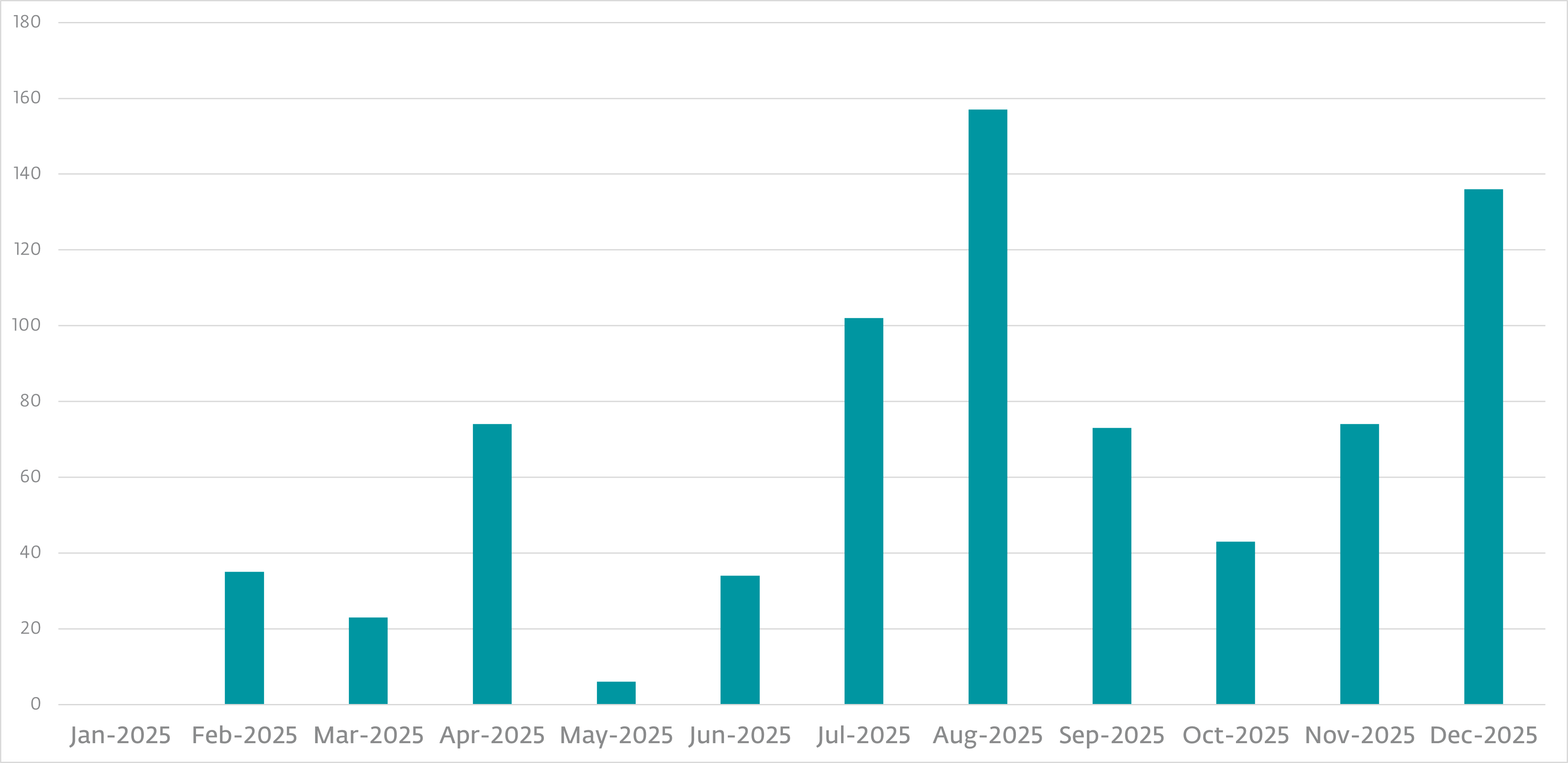
ESET reports that Gamaredon remained highly active throughout 2025, focusing exclusively on Ukrainian government and military targets while expanding its toolset and abusing legitimate services to conceal command and control and exfiltration infrastructure. The group also collaborated with Turla, increased spearphishing volume, and shifted stolen data to cloud storage providers such as Wasabi, Tebi, and Intercolo. #Gamaredon #Turla #Ukraine #Wasabi #Tebi #Intercolo
Keypoints
- Gamaredon targeted only Ukrainian governmental and military institutions throughout 2025.
- ESET identified 35 spearphishing campaigns in 2025, with the largest and most frequent activity occurring in the second half of the year.
- The group used archive attachments, XHTML files with HTML smuggling, and sometimes malicious hyperlinks to deliver HTA downloaders and follow-on payloads.
- Gamaredon introduced six new PowerShell tools in 2025 and revived the older VBScript weaponizer PteroSetup.
- The group collaborated with Turla in early 2025, and earlier cooperation with InvisiMole was also noted.
- Gamaredon increasingly hid C&C infrastructure behind tunnels, workers, DDNS, and PaaS services, while using dead-drop services for server resolution and payload delivery.
- PteroPSDoor and PteroVDoor were upgraded to exfiltrate stolen files to cloud storage services, with Intercolo becoming the primary destination by December.
MITRE Techniques
- [T1566.001 ] Spearphishing Attachment – Used to deliver archive attachments and XHTML files carrying HTA downloaders to targets (‘most campaigns used archive attachments or XHTML files employing HTML smuggling to deliver malicious HTA downloaders’).
- [T1027 ] Obfuscated Files or Information – HTML smuggling and hidden service layers were used to conceal payload delivery and infrastructure (’employing HTML smuggling to deliver malicious HTA downloaders’).
- [T1204.002 ] User Execution: Malicious File – Execution depended on users opening downloaded content, and later on a malicious file placed in Startup for execution after login (‘allowed the downloader to execute on the next login’).
- [T1053.005 ] Scheduled Task/Job: Startup Items – CVE-2025-8088 was abused to place the HTA downloader into the victim’s Startup folder for persistence (‘place its usual malicious HTA downloader into the victim’s Startup folder’).
- [T1068 ] Exploitation for Privilege Escalation – A WinRAR vulnerability was abused to gain persistence and aid compromise (‘began abusing CVE-2025-8088, a WinRAR vulnerability’).
- [T1105 ] Ingress Tool Transfer – Many tools downloaded payloads or fetched additional content from services like Telegra.ph, GoFile, and Dropbox (‘used to retrieve a single PowerShell payload via the Telegra.ph API’).
- [T1218.005 ] System Binary Proxy Execution: Mshta – HTA downloaders were a core delivery mechanism in spearphishing chains (‘deliver malicious HTA downloaders’).
- [T1059.001 ] Command and Scripting Interpreter: PowerShell – Gamaredon introduced multiple PowerShell tools and payload loaders (‘Gamaredon operators developed and deployed six new malicious PowerShell tools’).
- [T1059.005 ] Command and Scripting Interpreter: Visual Basic – VBScript was used by PteroDum, PteroSetup, and other weaponizers (‘resurrected an old VBScript weaponizer – PteroSetup’).
- [T1055 ] Process Injection – Payloads were executed in memory in some downloader chains (‘fetching and executing PowerShell payloads in memory’).
- [T1022 ] Data Encrypted for Impact – Encrypted payloads and encrypted C&C hostnames were retrieved and decrypted locally (‘retrieve an encrypted C&C hostname from Dropbox, decrypt it locally’).
- [T1095 ] Non-Application Layer Protocol – The group used tunnels, workers, and cloud infrastructure to relay communication and obscure the real server (‘hide C&C servers behind various third-party services such as tunnels, workers’).
- [T1219 ] Remote Access Software – Legitimate third-party services were abused to provide access and staging through intermediary infrastructure (‘using legitimate third-party services to hide both command and control information’).
- [T1114.001 ] Email Collection: Local Email Collection – Stolen data was exfiltrated to cloud storage services rather than directly to attacker infrastructure (‘upload stolen files to S3-compatible cloud storage services’).
- [T1074.001 ] Data Staged: Local Data Staging – The group staged or routed information through dead-drop services before reaching the final server (‘publish updated C&C information’).
- [T1090.003 ] Proxy: Multi-hop Proxy – Infrastructure was layered through dead drops, tunnels, workers, and DDNS to conceal the final C&C server (‘point to another intermediate layer’).
- [T1106 ] Native API – PteroPaste and related tools orchestrated execution and persistence using system capabilities (‘used for persistence and orchestration’).
- [T1132.001 ] Data Encoding: Standard Encoding – Encrypted/staged values were encoded and retrieved from public services before use (‘retrieve an encrypted C&C hostname from Dropbox’).
- [T1071.001 ] Application Layer Protocol: Web Protocols – Communications relied on web-based services such as Telegram, Telegra.ph, Dropbox, and GoFile (‘abuse numerous services in this way’).
Indicators of Compromise
- [Domains/URLs ] Infrastructure and dead-drop services used for C&C, staging, or exfiltration – trycloudflare.com, workers.dev, devtunnels.ms, loophole.site, and 2 more items
- [Domains/URLs ] Dead-drop and content-sharing services abused for payload delivery or C&C updates – t.me, telegra.ph, teletype.in, rentry.co, and 6 more items
- [Cloud storage services ] Exfiltration destinations and staging services – wasabisys.com, tebi.io, de-fra.i3storage.com, and Dropbox
- [Platform/services ] Legitimate services used for payload retrieval or infrastructure hiding – GoFile, Clever Cloud (cleverapps.io), Supabase (supabase.co), and rclone
- [File names/tool names ] Malicious tools and loaders referenced in the article – PteroPaste, PteroSetup, PteroPSDoor, and PteroVDoor
- [Vulnerability ] Exploited vulnerability used for persistence – CVE-2025-8088 in WinRAR