Researchers uncovered SharkLoader, a previously undocumented malware family used in the StrikeShark campaign to deploy Cobalt Strike Beacon through exploitation of public-facing applications and malicious droppers. The activity targeted diplomatic, government, and software development organizations across multiple countries, with tactics including DLL sideloading, API hooking, persistence, and credential theft. #SharkLoader #StrikeShark #CobaltStrikeBeacon #SystemSettings.exe #SystemSettings.dll
Keypoints
- SharkLoader is a newly identified loader malware used to install Cobalt Strike Beacon on compromised systems.
- The campaign, tracked as StrikeShark, affected organizations in Indonesia, Taiwan, Hong Kong, Lebanon, Syria, Colombia, North Macedonia, Nepal, and Serbia.
- Initial access was often achieved by exploiting internet-facing applications such as Microsoft Exchange, Microsoft SharePoint, Openfire, GeoServer, and other enterprise products.
- The attackers also used custom droppers disguised as legitimate installers or PDF documents to deliver SharkLoader components.
- SharkLoader relies on DLL sideloading, encrypted modules, and loader-lock bypass techniques to execute its payload in memory.
- Post-compromise activity included persistence, reconnaissance, Active Directory enumeration, and credential dumping from LSASS and NTDS.
- Attribution remains preliminary, but the use of several open-source tools suggests a Chinese-speaking threat actor with low confidence.
MITRE Techniques
- [T1190 ] Exploit Public-Facing Application – Used to gain initial access by exploiting internet-facing systems such as Microsoft Exchange, Openfire, and GeoServer (‘the threat actor exploited Microsoft Exchange vulnerabilities’ / ‘exploitation of Openfire (CVE-2023-32315)’ / ‘exploited a GeoServer instance vulnerable to CVE-2024-36401’).
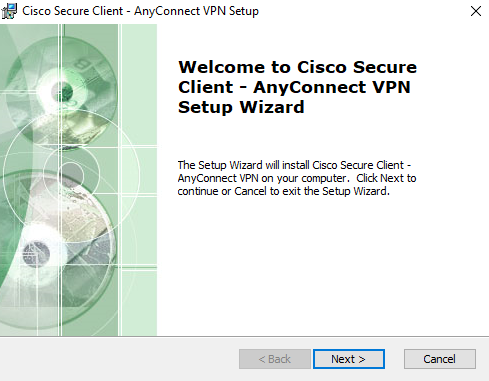
- [T1036 ] Masquerading – Droppers and files were disguised as legitimate software or vendor names to appear benign (‘masquerading as legitimate software installers or applications such as Google Update and Cisco AnyConnect’ / ‘used security product vendor names as the directory names’).
- [T1574.001 ] DLL Search Order Hijacking / DLL Side-Loading – SharkLoader was launched by abusing legitimate executables like SystemSettings.exe to load malicious DLLs (‘abused as part of a DLL sideloading chain’ / ‘hidden in the malicious SystemSettings.dll library’).
- [T1105 ] Ingress Tool Transfer – Malware components were uploaded and dropped onto victim systems through webshells and droppers (‘the malicious SystemSettings.dll library … was uploaded through the webshell’).
- [T1053.005 ] Scheduled Task – SharkLoader was launched and maintained via scheduled tasks (‘created two scheduled tasks’ / ‘configured to execute the copied SystemSettings.exe’).
- [T1547.001 ] Registry Run Keys / Startup Folder – Persistence was established using a Run key (‘manually created a registry Run key to launch SystemSettings.exe upon user logon’).
- [T1055 ] Process Injection – Cobalt Strike Beacon execution and related in-memory loading behavior involved running code in memory and manipulating process execution (‘reflectively loaded into memory and executed without being written to disk’ / ‘decompresses … Cobalt Strike Beacon shellcode’).
- [T1027 ] Obfuscated Files or Information – Encrypted, compressed, and packed components were used to hinder analysis (‘encrypted modules’ / ‘zlib-compressed data’ / ‘packed PE file with its MZ header removed’).
- [T1106 ] Native API – The malware used direct syscalls and Windows APIs to carry out loader, memory, and process operations (‘redirects the API call to a direct NtOpenProcessToken syscall stub’ / ‘uses … direct syscalls’).
- [T1134 ] Access Token Manipulation – Process creation and token-related APIs were hooked to support spoofing and execution control (‘OpenProcessToken’ / ‘AdjustTokenPrivileges’).
- [T1057 ] Process Discovery – The attackers enumerated running processes to find targets and confirm their own presence (‘tasklist /svc’ / ‘tasklist /SVC | findstr $selfname.exe’).
- [T1082 ] System Information Discovery – They collected host and network basics for reconnaissance (‘systeminfo’ / ‘ipconfig /all’).
- [T1016 ] System Network Configuration Discovery – Network configuration and connectivity details were gathered (‘ipconfig /all’ / ‘netstat -ano’ / ‘arp -a’).
- [T1018 ] Remote System Discovery – Network shares and reachable systems were enumerated (‘net share’ / ‘dir c$’).
- [T1069.002 ] Permission Groups Discovery: Domain Groups – AD group membership was queried (‘net group “Domain Controllers” /domain’ / ‘net group “Enterprise Admins” /domain’).
- [T1003.001 ] OS Credential Dumping: LSASS Memory – Credentials were targeted by dumping LSASS memory (‘Procdump64.exe -accepteula -ma lsass.exe’).
- [T1003.003 ] OS Credential Dumping: NTDS – Active Directory credential material was targeted via the NTDS database (‘ntdsutil “ac i ntds” “ifm” “create full $temp”‘).
- [T1497 ] Virtualization/Sandbox Evasion – The malware manipulated memory protections and execution flow to reduce detection (‘restore read, write, and execute (RWX) permissions’ / ‘evade memory scanning techniques’).
- [T1055.012 ] Process Hollowing – The campaign used suspended threads and in-memory execution patterns to run payloads (‘creates a new thread in a suspended state’ / ‘the suspended thread is resumed’).
Indicators of Compromise
- [MD5 hashes ] Malware samples and components – 24FCEBDEECBA65004FDB0923763D74FD, AA3086BE652C8B20B0B29B2730D57119, and 2 more hashes.
- [Domain names ] C2 or related infrastructure – connect-microsoft[.]com, comms-record[.]comms-record[.]top, and ms-tray[.]top.
- [CVE identifiers ] Exploited vulnerabilities – CVE-2021-26855, CVE-2023-32315, and 2 more items.
- [Executable and module filenames ] Delivered or malicious files – SystemSettings.exe, SystemSettings.dll, and 2 more items.
- [Dropper filenames ] Initial delivery samples – GoogleUpdateStepup.exe, AnyConnect-win-4.10.04071-predeploy-k9exe, and 2 more items.
- [Registry key / persistence artifact ] Run key used for persistence – HKEY_CURRENT_USERSOFTWAREMicrosoftWindowsCurrentVersionRun with value MFUpdate.
- [Scheduled task names ] Persistence and execution tasks – MicrosoftWindowsEdgeEdgeupdate, OneDrive Standalone Update Task-S-1-5-21-4165425321-4153752593-2322023643-1000, and MicrosoftUpdateTaskUserS-1-5-32-2456537112-101246289-228944324-1000.
- [File paths ] Deployment and staging locations – C:ADriveLogs_LogsSystemSettings.exe, %APPDATA%xwreg, and %APPDATA%xgdf.
Read more: https://securelist.com/strikeshark-campaign/120326/