In May 2026, Chaotic Eclipse disclosed three Windows zero-days—YellowKey, GreenPlasma, and MiniPlasma—with PoCs published days after Microsoft’s Patch Tuesday to delay a fix window. YellowKey bypasses BitLocker through WinRE, while GreenPlasma and MiniPlasma achieve SYSTEM privileges by abusing Windows Cloud Files and related trust relationships. #YellowKey #GreenPlasma #MiniPlasma #ChaoticEclipse
Keypoints
- Chaotic Eclipse publicly released PoCs for three Windows zero-days: YellowKey, GreenPlasma, and MiniPlasma.
- YellowKey bypasses BitLocker by abusing WinRE and autofstx.exe, enabling access to encrypted drives with brief physical access.
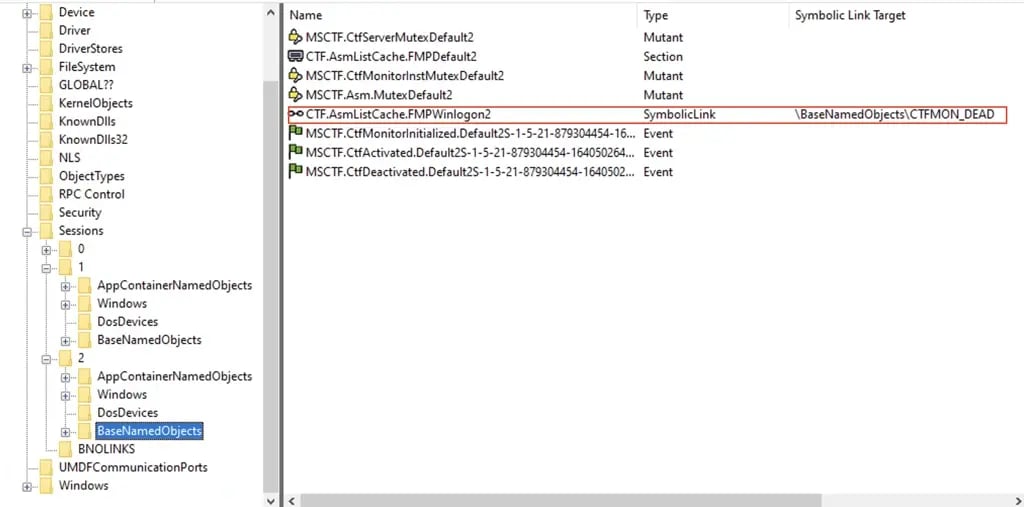
- GreenPlasma is a local privilege escalation flaw that abuses ctfmon.exe, registry symbolic links, and Cloud Files-related behavior to obtain SYSTEM privileges.
- MiniPlasma targets cldflt.sys and reuses an old Project Zero PoC pattern to gain SYSTEM access and launch an interactive shell.
- The exploits affect Windows 11, Windows Server 2022, and Windows Server 2025; Windows 10 is largely not affected for YellowKey and MiniPlasma.
- Detection guidance focuses on Cloud Files activity, registry symbolic links, rogue wermgr.exe execution, named pipe creation, and suspicious USB/WinRE usage.
- Recommended mitigations include default-deny application control, restricting Cloud Files components, using TPM+PIN for BitLocker, and applying Microsoft’s WinRE remediation script.
MITRE Techniques
- [T1057 ] Process Discovery – GreenPlasma relies on ctfmon.exe activity in the interactive session to reach the privileged trust path (‘ctfmon becomes active’).
- [T1068 ] Exploitation for Privilege Escalation – GreenPlasma and MiniPlasma are both local privilege escalation exploits that obtain SYSTEM-level access through vulnerable Windows components (‘can allow an attacker to obtain SYSTEM-level privileges’, ‘deliver an interactive SYSTEM shell’).
- [T1078 ] Valid Accounts – YellowKey leverages the TPM-only BitLocker trust path in WinRE to access an already decrypted volume without recovery credentials (‘no recovery key, password, or PIN required’).
- [T1548.002 ] Abuse Elevation Control Mechanism: Bypass User Account Control – GreenPlasma launches an elevated conhost.exe through UAC to activate privileged behavior (‘launches an elevated conhost.exe through UAC’).
- [T1112 ] Modify Registry – All three chains modify registry values or keys, including DisableLockWorkstation and windir, to redirect behavior or disable protections (‘setting DisableLockWorkstation=1’, ‘overwrite the windir environment variable’).
- [T1014 ] Rootkit – YellowKey abuses WinRE/BootExecute behavior to obtain an unrestricted command prompt before normal protections load (‘runs very early in boot’, ‘handing the attacker a raw command prompt’).
- [T1556.002 ] Modify Authentication Process: Pluggable Authentication Modules – Not present.
- [T1036 ] Masquerading – MiniPlasma stages a malicious wermgr.exe outside standard Windows paths to masquerade as a legitimate binary (‘places a malicious wermgr.exe in an attacker-controlled location’).
- [T1071.001 ] Application Layer Protocol: Web Protocols – Not present.
- [T1547.001 ] Boot or Logon Autostart Execution: Registry Run Keys / Startup Folder – YellowKey abuses the BootExecute registry value to launch autofstx.exe during boot (‘launched through the BootExecute registry value’).
- [T1055 ] Process Injection – Not present.
- [T1021.004 ] Remote Services: SSH – Not present.
- [T1552.001 ] Unsecured Credentials: Credentials In Files – Not present.
- [T1205 ] Traffic Signaling – MiniPlasma uses a named pipe for coordination between the rogue wermgr.exe and the exploit controller (‘creates a named pipe MiniPlasmaWERPipe’).
- [T1105 ] Ingress Tool Transfer – The exploit places crafted FsTx logs, malicious binaries, and other payload artifacts onto removable media or attacker-controlled locations (‘copies the crafted FsTx folder structure to System Volume InformationFsTx on a USB stick’).
- [T1127 ] Trusted Developer Utilities Proxy Execution – MiniPlasma triggers Windows Error Reporting to execute the attacker’s copy of wermgr.exe (‘triggers the built-in scheduled task … which executes as NT AUTHORITYSYSTEM’).
- [T1543.003 ] Create or Modify System Process: Windows Service – Not present.
- [T1027 ] Obfuscated Files or Information – YellowKey uses crafted transactional NTFS log files to manipulate recovery behavior (‘By planting specially crafted Transactional NTFS (TxF) log files’).
- [T1556.002 ] Abuse Elevation Control Mechanism: Bypass User Account Control – MiniPlasma and GreenPlasma both use privileged Windows behavior to cross from user context into SYSTEM execution (‘obtain SYSTEM access’).
- [T1611 ] Escape to Host – Not present.
- [T1546.015 ] Event Triggered Execution: Winlogon Helper DLL – Not present.
Indicators of Compromise
- [File names ] malicious or staged binaries and recovery artifacts – autofstx.exe, wermgr.exe, winpeshl.ini, and other N/A items
- [Registry paths ] privilege-escalation and policy modification targets – HKCUSoftwareMicrosoftWindowsCurrentVersionPoliciesSystemDisableLockWorkstation, HKU.DEFAULTVolatile Environmentwindir, and other N/A items
- [Registry keys ] Cloud Files and symbolic-link abuse locations – HKEY_USERS.DEFAULTSoftwarePoliciesMicrosoftCloudFilesBlockedApps, HKCUSoftwarePoliciesMicrosoftCloudFiles, and other N/A items
- [Named pipes ] MiniPlasma coordination channel – MiniPlasmaWERPipe
- [DLL / driver names ] Cloud Files components involved in exploitation – cldapi.dll, cldflt.sys, and other N/A items
- [Scheduled task path ] Windows Error Reporting trigger used by MiniPlasma – MicrosoftWindowsWindows Error ReportingQueueReporting
- [USB / device artifacts ] physical-access delivery vector for YellowKey – USB storage device, USBSTOR, and other N/A items
- [Object Manager paths ] section-object and symlink abuse targets – SessionsBaseNamedObjectsCTF.AsmListCache.FMPWinlogon, BaseNamedObjectsCTFMON_DEAD, and other N/A items