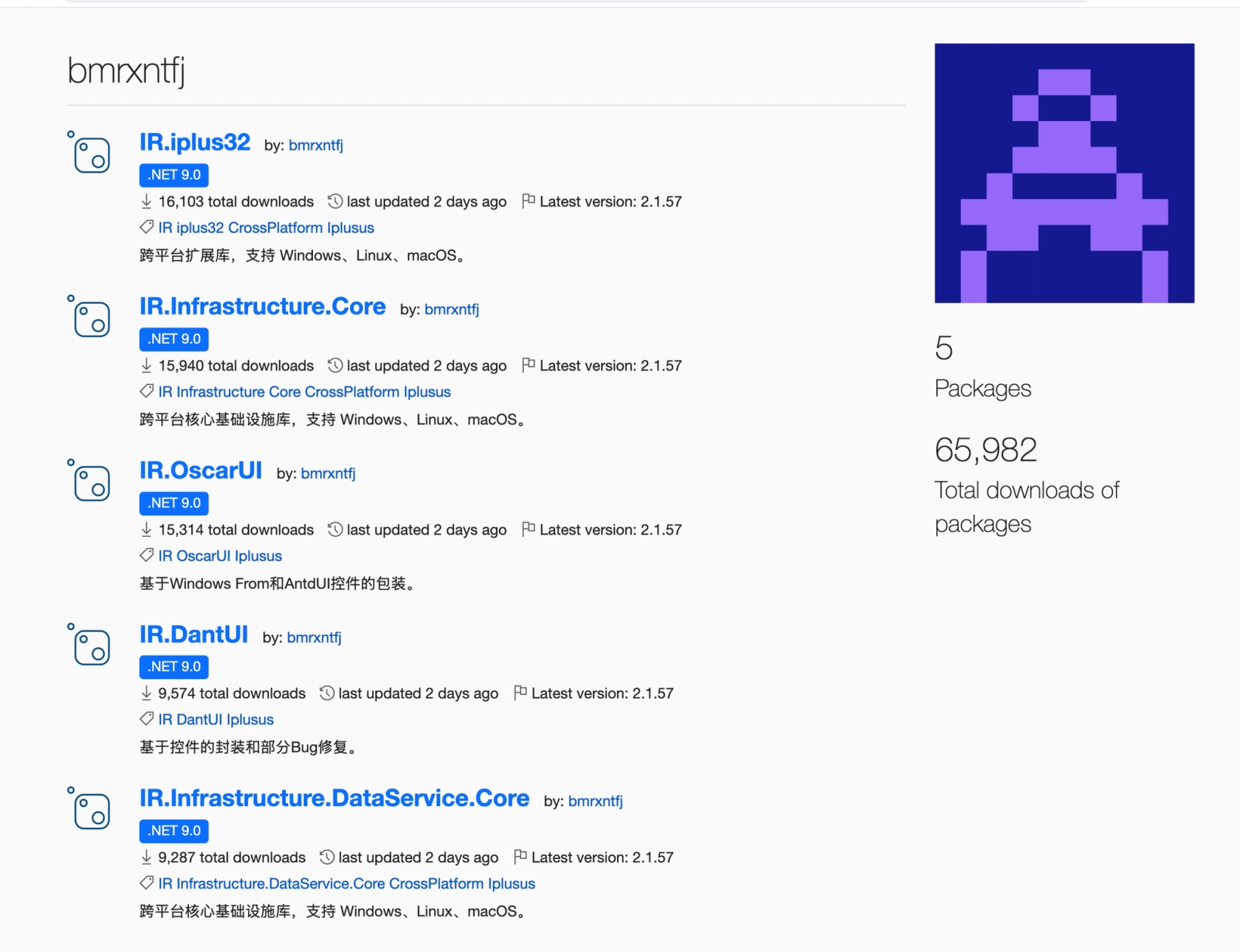
Socket Threat Research identified five malicious NuGet packages under the bmrxntfj account that typosquat Chinese .NET UI and infrastructure libraries, each delivering a .NET Reactor-protected infostealer through a decompiled legitimate library wrapper. The campaign has amassed about 65,000 downloads and steals browser credentials, cryptocurrency wallets, and other sensitive data while exfiltrating to dns-providersa2[.]com. #bmrxntfj #NuGet #AntdUI #IR.DantUI #IR.iplus32 #dns-providersa2.com
Keypoints
- Five malicious NuGet packages were published under the account bmrxntfj and are still available in NuGet at the time of reporting.
- The packages impersonate legitimate Chinese .NET libraries such as AntdUI and internal enterprise-style libraries to appear credible to targeted developers.
- Each package hides a .NET Reactor-protected payload that hooks the CLR JIT pipeline and decrypts malicious code at runtime.
- The infostealer targets credentials from 12 Chromium-family browsers, Firefox, Mozilla, Thunderbird, browser wallet extensions, and desktop crypto wallets.
- Stolen data is staged in C:ProgramDataMicrosoft OneDrivekeys.dat and exfiltrated to https://dns-providersa2[.]com/upload.
- The operator rotated package versions repeatedly, using many unlisted releases to evade hash-based detection and keep install counts growing.
- Attribution and infrastructure clues include the dns-providersa2[.]com domain, the git[.]justdotrip[.]com repository server, and a shared Reactor RSA modulus across related samples.
MITRE Techniques
- [T1195.002] Supply Chain Compromise – The attacker distributed trojanized NuGet packages through a trusted package ecosystem to compromise developers and build systems [‘malicious NuGet packages published under the account bmrxntfj’]
- [T1027] Obfuscated Files or Information – The payload used .NET Reactor/Necrobit protection, encrypted method bodies, string-split API names, and hidden version history to hinder analysis [‘every method body is replaced by a Reactor-Necrobit native decrypt stub’, ‘219 of those versions carry listed: false’]
- [T1055.013] Process Injection: Process Doppelgänging – The payload patched clrjit.dll!getJit and inserted a hook into the JIT pipeline to control method compilation in-process [‘Patches clrjit.dll!getJit with a 4-byte JMP’]
- [T1497.001] Virtualization/Sandbox Evasion: System Checks – The malware used anti-analysis checks and blocklists to avoid sandboxes and analyst systems [’22 hardcoded uppercase SHA-256 hex strings form an internal blocklist’]
- [T1005] Data from Local System – The stealer harvested browser databases, wallet files, SSH keys, Outlook profiles, Steam data, and user documents from the host [‘Browser credential harvesting’, ‘full file tree under Documents, Desktop, and Downloads are harvested’]
- [T1071.001] Application Layer Protocol: Web Protocols – Exfiltration occurred over HTTPS POST requests to the C2 upload endpoint [‘The staged archive is POSTed to https://dns-providersa2[.]com/upload’]
- [T1539] Steal Web Session Cookie – The payload targeted browser cookies and session tokens stored in Chromium-family browsers [‘browser saved passwords, browser cookies and session tokens’]
- [T1552.001] Unsecured Credentials: Credentials in Files – The malware collected SSH private keys and other stored secrets from files on disk [‘SSH private keys (id_rsa)’]
- [T1560] Archive Collected Data – Harvested files were staged into a single archive-like location before exfiltration [‘All harvested material is staged under C:ProgramDataMicrosoft OneDrivekeys.dat’]
- [T1082] System Information Discovery – The malware enumerated system and user context details, including hostnames, usernames, and architecture-specific process targets [‘hostname NEW-4V, username oljwe4y98’]
- [T1083] File and Directory Discovery – The stealer walked directories and browser/wallet paths to locate sensitive files [‘the full file tree under Documents, Desktop, and Downloads are harvested’]
Indicators of Compromise
- [Malicious package names ] NuGet typosquat packages used in the campaign – IR.DantUI, IR.Infrastructure.Core, and other IR.* packages
- [Threat actor / publisher ] malicious NuGet publisher account – bmrxntfj
- [C2 domain / endpoints ] command-and-control and exfiltration – dns-providersa2[.]com, https://dns-providersa2[.]com/upload, and https://dns-providersa2[.]com/check
- [IP address ] primary C2 hosting – 62[.]84[.]102[.]85, and operator infrastructure at 47[.]100[.]60[.]237
- [File path ] staging location on affected systems – C:ProgramDataMicrosoft OneDrivekeys.dat
- [File names / binaries ] recovered malicious artifacts and memory dump – s4.exe, we4ftg.exe
- [File hashes ] sample and payload hashes – s4.exe : e1869d6571894f058dd4ab2b66f060628dc364ee8e29afbd2323c95e5002fb8e, we4ftg.exe : 8f7aa15c77bde94087bb74dfc072e25212797b313731b4cad0ded3e152268dcf, and 2 more hashes
- [Encrypted stage-2 resource hashes ] package payload hashes for v2.1.55 – 34e2d63b5db7e24c808711c2ca0c0a42afde97a0086d7d81609110c002d18d7c, b8543b2a1ad8862ebfef18924cf5444d2adfee996939963f4fc2748c582cf9a9, and 3 more hashes
- [Browser extension IDs ] hardcoded wallet extensions targeted by the stealer – nkbihfbeogaeaoehlefnkodbefgpgknn, ibnejdfjmmkpcnlpebklmnkoeoihofec, and other 3 IDs
- [Name servers ] delegated DNS infrastructure – 1-you.njalla[.]no, 2-can.njalla[.]in, and 3-get.njalla[.]fo
- [Repository URL / development host ] operator infrastructure referenced in package metadata – git[.]justdotrip[.]com / 47[.]100[.]60[.]237
Read more: https://socket.dev/blog/5-malicious-nuget-packages-impersonate-chinese-ui-libraries