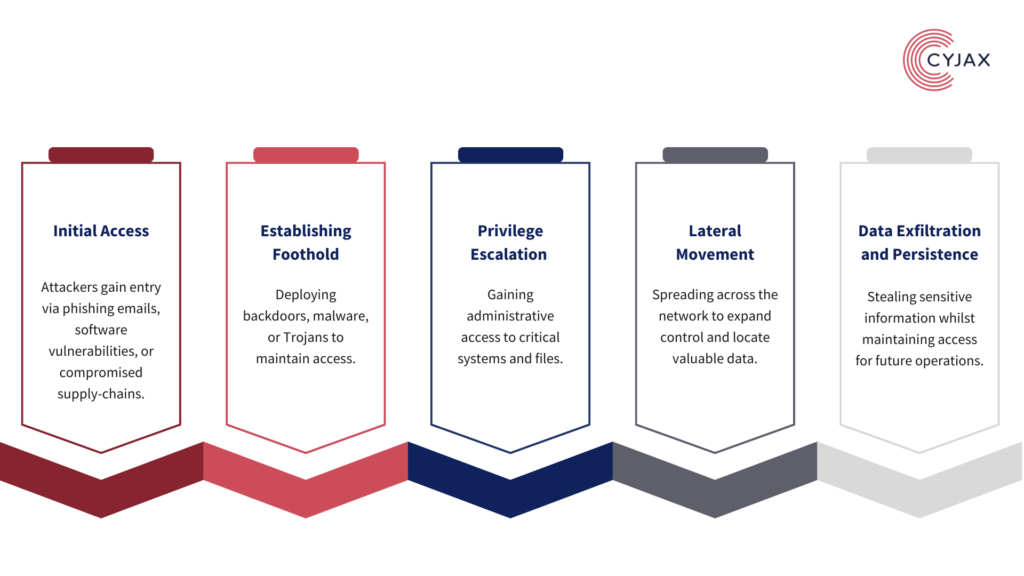
Advanced Persistent Threats (APTs) are sophisticated, often state-sponsored cyber actors targeting espionage and data theft. Historically, APTs have demonstrated the ability to infiltrate networks for extended periods. Well-known groups include APT29 and APT28 from Russia, and Lazarus from North Korea, employing techniques like phishing and malware. Defense against such threats requires a proactive, intelligence-driven strategy. Affected: APTs, cybercriminals, US government, private sector, critical infrastructure
Keypoints :
- APTs aim for long-term infiltration and data theft rather than immediate financial gain.
- They follow a structured attack lifecycle to maximize effectiveness and minimize exposure.
- Notable APT groups include APT29 (CozyBear), APT28 (FancyBear), and Lazarus.
- Historical APT incidences date back to the 1980s, such as the Cuckoo’s Egg case.
- APTs are linked to government interests and engaged in espionage and sabotage.
- Defensive strategies include threat intelligence and automated response systems.
- Understanding TTPs helps anticipate attacker behavior and strengthen defenses.
- Real-time tracking of threat actors enhances proactive defense mechanisms.
MITRE Techniques :
- Phishing (T1566): Used to gain initial access and compromise high-profile targets.
- Lateral Movement (T1021): Allows attackers to move through the network undetected.
- Exploitation of Public-Facing Applications (T1190): Aided by zero-day vulnerabilities in applications.
- Credential Dumping (T1003): Obtaining account credentials for further access.
- Data Exfiltration Over Command and Control Channel (T1041): For stealthy data extraction.
Full Story: https://www.cyjax.com/resources/blog/what-are-advanced-persistent-threats-apts/