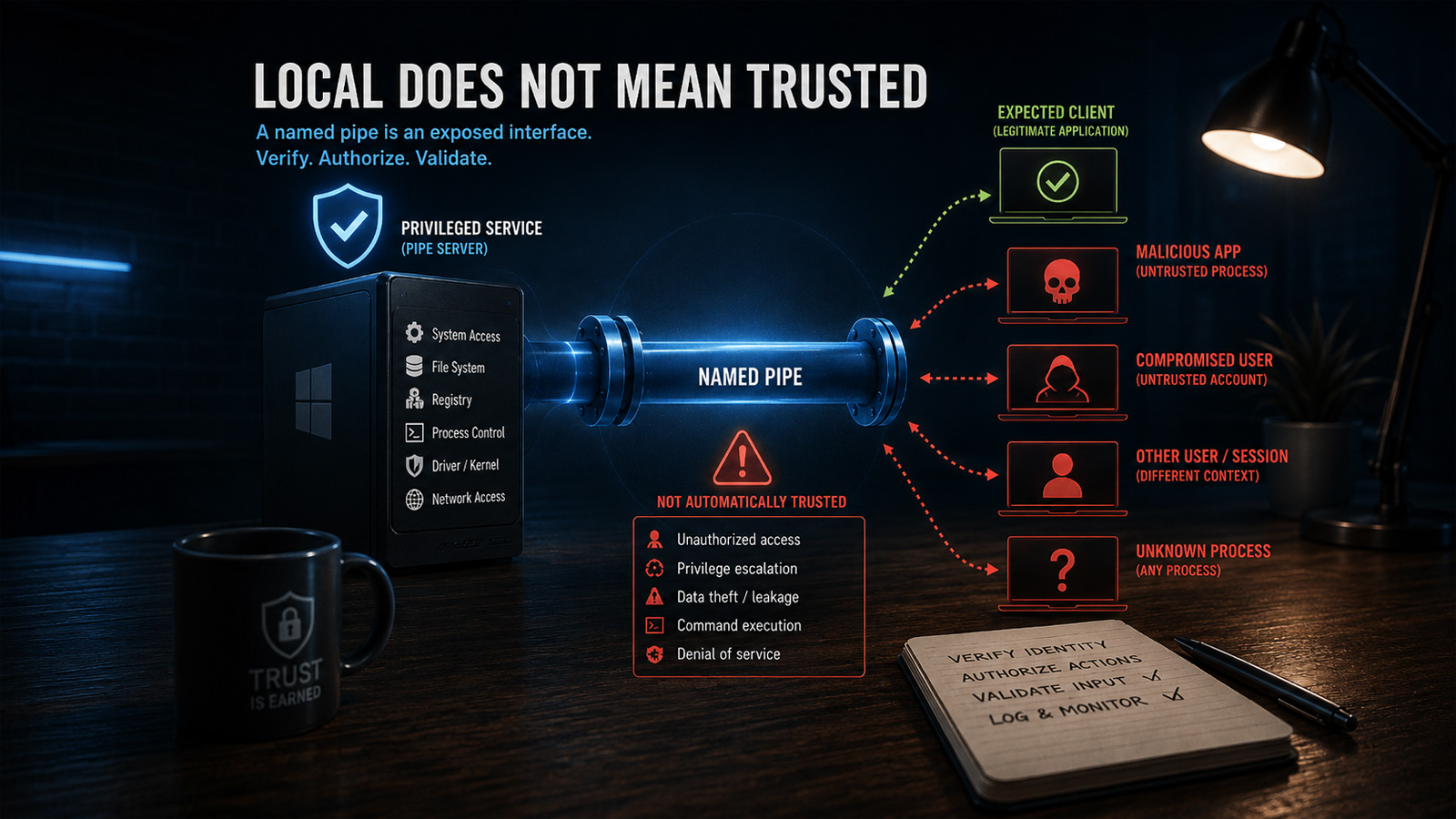
Named pipes on Windows can become a security boundary when privileged services communicate with less trusted applications, so they must be protected with restrictive access control, identity verification, and careful authorization. The article explains how to defend against confused deputy attacks, untrusted input, denial-of-service conditions, and remote exposure by using narrow protocols, bounded resources, and secure impersonation practices. #ThreatLocker #FaridMustafayev #NamedPipeServerStream #GetNamedPipeClientProcessId #ImpersonateNamedPipeClient #RevertToSelf #WinVerifyTrust
Keypoints
- Named pipes should be treated as exposed local interfaces, not trusted internal links.
- Privileged services must verify client identity and authorize each command separately.
- Pipe messages need strict framing, size limits, and validation of all values.
- Impersonation should be narrow, verified, and always reverted in a finally block.
- Defenses should include local-only restrictions, DoS limits, and security-focused logging.